
Most people apply a night cream because it seems like the right thing to do before bed. But overnight skin repair is a specific biological process. Understanding how it works changes what you should actually look for in a formula.
The Problem: What People Actually Experience
You apply your night routine consistently. The results are not.
Some mornings, skin feels balanced and comfortable. Other mornings, the experience is different:
- Skin feels hydrated at bedtime but dry or tight by morning
- Rough texture persists despite weeks of regular night cream use
- A product that worked well in one season feels inadequate in another
- Skin appears more reactive in the morning than expected
- Rich night creams feel heavy going on but do not translate to better skin by morning
These experiences are not always about using the wrong product. They often reflect a mismatch between what the formula delivers and what the skin is actually doing while you sleep.
Overnight skin repair is not a single event. It is a sequence — and a formula that only addresses one part of that sequence cannot support the whole.
The Science: What Is Actually Happening Inside the Skin
Skin Follows a Circadian Repair Cycle
The skin does not rest at night. It changes its priorities.
During the day, the skin focuses on defence — managing UV, pollution, temperature, and barrier maintenance. At night, without those pressures, it shifts toward renewal.
Cell turnover speeds up. Structural proteins are produced. DNA damage from daytime UV and pollution is more actively repaired. Blood flow to the skin increases, bringing oxygen and nutrients.
This shift follows the body’s circadian rhythm — a 24-hour biological clock that tells different systems when to defend and when to repair.
The repair window is real. The question is whether the formula you apply actually supports it.
TEWL Increases at Night
Here is the part most brands do not mention.
Transepidermal water loss (TEWL) is the rate at which water evaporates through the outer skin layers. It happens continuously — day and night. But it is not constant. Research shows TEWL rises in the evening and overnight as part of the skin’s natural cycle.
The outermost layer of skin is called the stratum corneum. Think of it as a wall — skin cells are the bricks, and lipids are the mortar holding them together. When this structure is intact, it slows water from escaping. When lipids are depleted, water escapes faster.
This is why skin can feel hydrated at bedtime and dehydrated by morning. The product delivered moisture. The barrier was not strong enough to hold it.
The Skin’s Built-In Hydration System
Inside the stratum corneum, the skin has its own moisture-holding mechanism — the Natural Moisturizing Factor (NMF). It is a collection of water-binding molecules that the skin produces naturally. These include amino acids, sodium PCA, and urea.
Their job is to attract and hold water within the outer skin layers overnight.
When the NMF is depleted — from harsh cleansing, low humidity, or repeated barrier disruption — the skin loses this capacity. Even a good night cream cannot fully replace a depleted NMF. This is why consistent, gentle daily care matters more than any single active ingredient.
Sleep Quality Affects How Well Repair Works
The biological repair cycle needs adequate sleep to run properly.
Studies show that shorter or disrupted sleep is linked to higher TEWL, lower skin hydration, and slower barrier recovery. Poor sleepers show measurably weaker overnight repair — even when their skincare routines are identical to good sleepers.
Formulas can only do their job when the biological repair window is actually open.
Formulation Logic: How Overnight Skin Repair Works in Skincare
The biology above makes the formulation logic clear. Overnight skin repair is not driven by one ingredient. It requires a system — each layer addressing a different part of the repair sequence.
The Humectant Network
Humectants attract water into the outer skin layers.
Common examples include glycerin, sodium PCA, propanediol, and sodium hyaluronate. They draw water toward the stratum corneum and support the NMF’s moisture-holding function.
At night, when TEWL is elevated, humectants alone have a problem. They pull water to the surface — but without a lipid system to keep it there, that water evaporates. In a warm or dry sleeping environment, this can happen faster than most people expect.
Humectants are the starting point of overnight hydration. They are not the complete solution.
The Lipid Architecture
Lipids form the structural seal of the barrier. They are the mortar in the brick-and-mortar model.
At night, the skin’s own lipid synthesis is part of the active repair process. A good night cream supports this by providing compatible lipids in the formula. Butters add depth and occlusive coverage. Plant oils — like jojoba or sesame — add skin-compatible softness. Lightweight lipids like squalane integrate into the existing barrier without sitting heavy.
Without a lipid system, humectants attract water and overnight TEWL removes it. These two systems are not optional extras. They depend on each other.
Occlusive Balance — The Point Most Blogs Miss
Occlusives slow water evaporation by creating a film on the skin surface. Used correctly, they reduce overnight TEWL and let the humectant and lipid systems work.
But here is the nuance: too much occlusion in warm sleeping conditions — particularly relevant in India — can trap heat and sweat against the skin. This does not support repair. It can disrupt it.
The goal is not to seal the skin completely. It is to slow moisture loss enough for the barrier repair process to run without interference. A well-formulated night cream sits between too light to reduce TEWL and too heavy to tolerate in warm, humid conditions.
Functional Actives
Night is generally the better time for actives that support skin renewal and barrier function. They are not competing with UV exposure or sunscreen chemistry. And because cell turnover is already elevated overnight, certain actives — like bakuchiol, niacinamide, and ferulic acid — are operating in a more receptive environment.
But actives only work within the system. An active at the right concentration, in the right vehicle, at the right pH will contribute to repair. The same active in a poorly balanced formula may do very little.
The principle is this: stimulating actives and barrier support must be present together in the same formula. A strong active without adequate barrier protection can increase TEWL and leave skin more reactive by morning — the opposite of overnight repair.
Practical Advice: What to Do
1. Cleanse gently before your night routine. Stripping cleansers remove surface lipids and reduce the NMF baseline before repair even begins. A mild cleanser preserves the starting point the skin needs.
2. Apply night cream to slightly damp skin. Humectants work better when some surface moisture is present. Apply immediately after patting your skin dry — not bone dry. This gives the formula something to work with.
3. Apply your routine 30 to 60 minutes before sleep. This allows the formula to settle as the skin shifts into its repair window. Applying and immediately going to bed reduces the time the product has to absorb.
4. Use enough product. A very thin layer may not provide sufficient lipid coverage to meaningfully slow TEWL. A complete, comfortable application allows the lipid system to form a functional layer.
5. Be consistent across weeks, not just nights. Barrier rebuilding is gradual. It happens across multiple skin cell cycles. One good night does not restructure the barrier. Four to six weeks of consistent use produces real, measurable change.
6. Avoid directing AC airflow or a fan directly at your face during sleep. Direct airflow speeds up surface evaporation and reduces even a well-formulated night cream’s ability to retain moisture. It is a small environmental variable with a real formulation impact.
Simple evening structure: Gentle cleanse → night cream on slightly damp skin → allow to settle before sleep.
Climate Relevance: Why This Matters in Indian Conditions
AC Environments and Overnight TEWL
Many Indian bedrooms run air conditioning through the night. AC reduces indoor humidity, sometimes to 30–40% relative humidity in sealed rooms.
At those levels, the gap between moisture inside the skin and moisture in the surrounding air widens. Water evaporates faster. The lipid system in a night cream has to work harder to offset this — harder than in a naturally humid room.
A formula calibrated for temperate European climates may not provide enough lipid coverage for an Indian bedroom with full overnight AC. The demand on the barrier is meaningfully higher here.
Heat and Sweat Cycles
In most Indian cities, evenings stay warm. Sweat, sebum, and daily pollution residue accumulate on the skin surface. This creates a complicated starting point for the night routine.
If cleansing is too harsh, the NMF baseline is depleted before any repair support is applied. If cleansing is insufficient, surface residue interferes with barrier function overnight. Getting the cleansing step right directly affects the quality of what comes after.
Monsoon and Humidity Shifts
Monsoon brings high outdoor humidity — sometimes above 80% in coastal cities. Humectants perform efficiently in these conditions. Atmospheric moisture is available to work with.
But the same evening often involves air-conditioned indoor spaces. Moving between high outdoor humidity and dry indoor air stresses the skin’s moisture regulation. A formula built only for dry conditions feels heavy in monsoon air. A formula built only for humidity may be insufficient in AC rooms.
This is why balanced lipid-humectant systems suit Indian conditions better than formulas optimised for a single environment.
Urban Pollution and Overnight Recovery
Daily pollution exposure in Indian cities generates oxidative stress that degrades the lipid structure of the stratum corneum. Over time, this creates a deficit that the skin’s overnight repair system has to address — alongside normal barrier rebuilding.
Night formulas that include antioxidant-supporting actives — tocopherol, ferulic acid, botanical antioxidants — reduce the oxidative load the barrier carries into the sleep cycle. This is not dramatic detoxification. It is reducing interference with a repair process that is already running.
Hard Water and the Cleansing Starting Point
In many Indian cities, tap water contains elevated calcium and magnesium. These minerals interact with cleansing agents and can leave residues on the skin after washing.
This means the skin enters the overnight repair window already carrying surface stress — before the night cream is even applied. Using a mild cleanser that rinses cleanly in hard water, followed immediately by the night routine, reduces this starting deficit.
The Nature Theory Approach
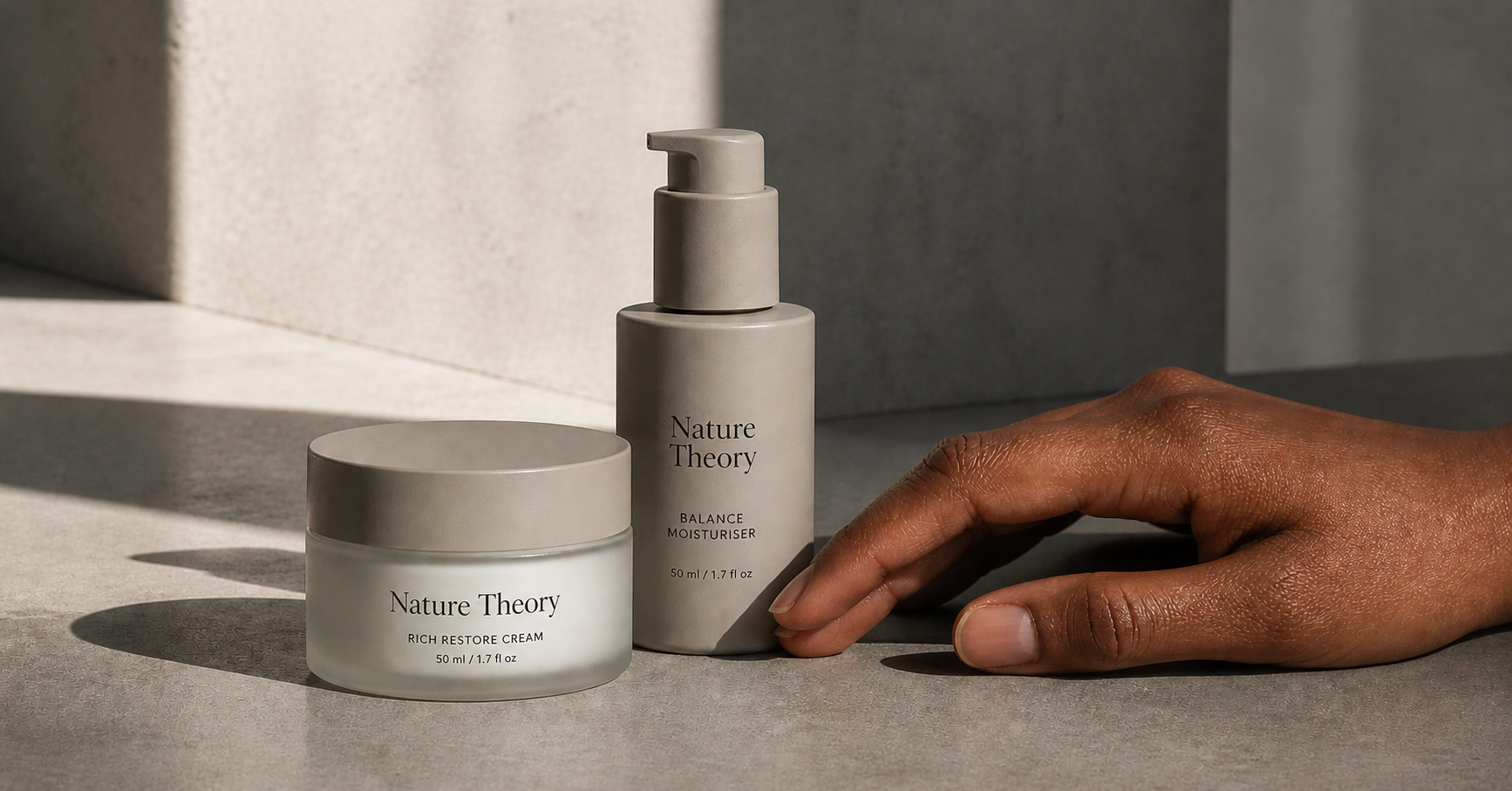
At Nature Theory, overnight skin repair is supported through a structured lipid architecture — plant-derived butters, multi-oil repair blends, and squalane — proportioned to reduce TEWL throughout the elevated water loss window of the sleep cycle. This lipid system works alongside a humectant network of glycerin, sodium PCA, and propanediol that maintains hydration within the stratum corneum as the barrier rebuilds. Functional actives — bakuchiol, niacinamide, and ferulic acid — are included within this base so that cellular support and barrier protection work together. The formulation is designed with Indian sleeping environments in mind, where AC exposure, seasonal humidity variation, and pollution recovery place higher demands on the night formula than temperate-climate products typically account for.
Summary
Overnight skin repair follows a real biological cycle. Cell turnover accelerates, lipid synthesis increases, and barrier rebuilding becomes active during sleep — guided by the skin’s circadian rhythm. At the same time, TEWL rises, meaning the barrier is simultaneously trying to rebuild while losing more moisture than during the day. A well-formulated night cream supports this by attracting water through humectants, retaining it through a structured lipid system, and including actives that complement rather than disrupt the skin’s own repair process. Consistent, formulation-supported care over weeks — not occasional use — produces the cumulative barrier improvement that reliable overnight repair requires.
FAQ
Why does my skin still feel dry in the morning even though I apply night cream every night? The most common reason is that the formula is strong on humectants but light on lipids. Humectants attract water — but if the lipid coverage is insufficient, that water evaporates overnight, especially in AC environments. A formula with a more structured lipid system retains moisture more effectively through the elevated TEWL window of the sleep cycle.
Does applying my night cream in a certain order actually matter? Yes. Applying to completely dry skin means humectants draw water upward from deeper layers — where it can still evaporate if lipid coverage is thin. Applying to slightly damp skin gives humectants surface moisture to bind. This is a small application variable with a real impact on overnight hydration retention.
Why does a night cream that worked in winter feel too heavy in Mumbai or Chennai summers? Warm, humid conditions change how the formula’s occlusive component sits on skin. Dense lipid layers can trap heat and sweat in high temperatures, creating discomfort. The same formula that provides effective barrier coverage in dry winter air can overload the skin in warm, humid sleeping conditions. This is a calibration issue — not a product quality problem.
Is the biological repair window at night actually real, or is it a marketing idea? It is real. Cell turnover rates, lipid synthesis, and DNA repair activity all follow circadian patterns with measurably higher activity during the night hours. But the window is gradual and cumulative — not dramatic or instant. It also requires consistent, adequate sleep to run its full course. No formula compensates for chronically poor sleep.
Can I use the same moisturiser morning and night, or does a night cream serve a different purpose? A dedicated night formula differs in two practical ways. First, it usually carries a higher lipid load — right for overnight TEWL reduction but often too heavy for comfortable wear under daytime sunscreen. Second, some actives in night formulas are not suited to UV exposure or degrade in sunlight. These are formulation decisions grounded in biology, not arbitrary category marketing.
How does living in a polluted Indian city affect overnight skin repair over time? Daily particulate pollution degrades the lipid structure of the stratum corneum and generates oxidative stress. Over time, this creates a compounding deficit that the overnight repair system has to manage alongside normal barrier maintenance. Night formulas that include antioxidant-supporting actives — ferulic acid, tocopherol, botanical antioxidants — help reduce this oxidative load before the repair window opens, giving the skin a cleaner environment to work in.
Latest Posts
Continue learning how skincare works.
We explain ingredients, formulation systems, and climate-based skincare in a structured way.
2 thoughts on “What Actually Happens to Your Skin While You Sleep — And Why Most Night Creams Miss It”
Comments are closed.