
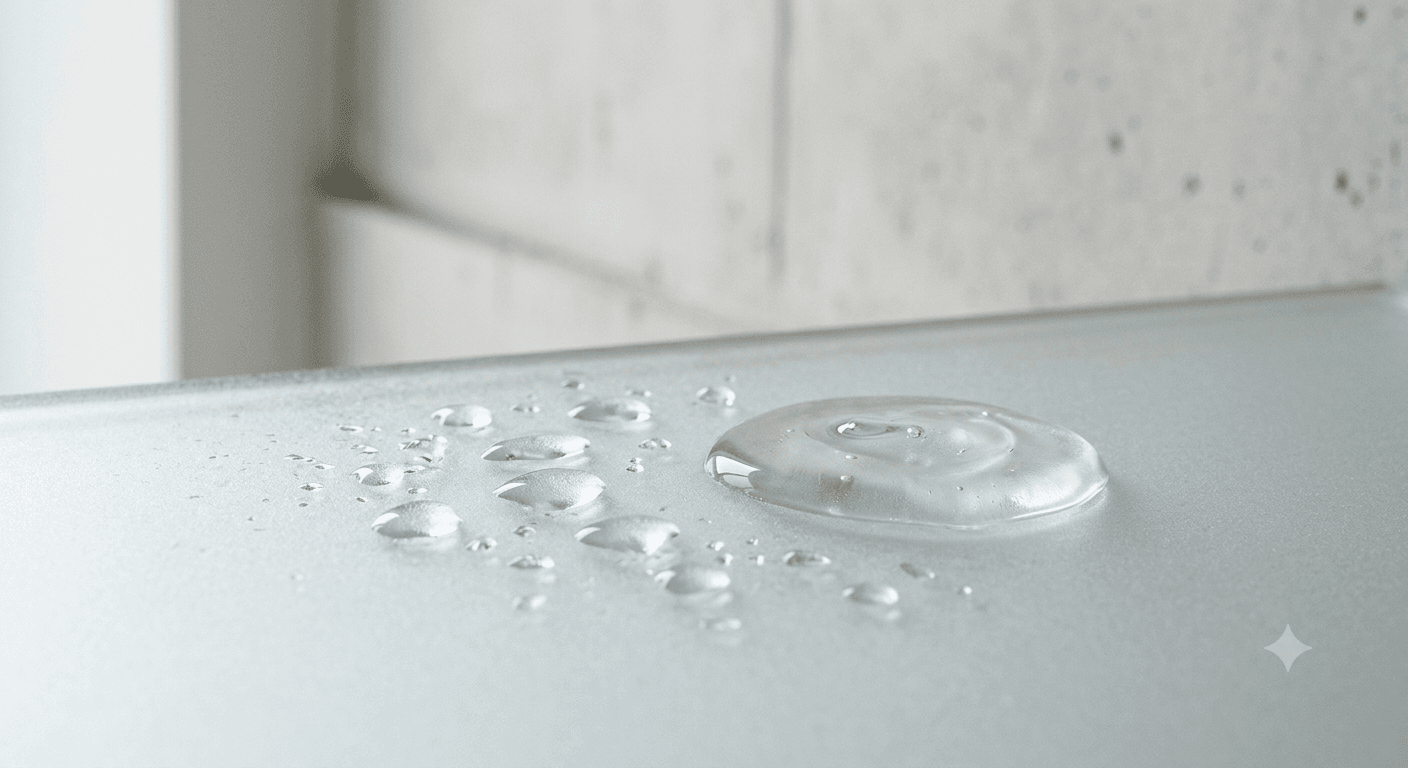
Hydrating ingredients in face wash may sound like a contradiction, since cleansers exist to remove things, not add them. Yet most modern formulas include glycerin, sodium PCA, or aloe for a specific reason: to offset what surfactants take away. This is a formulation decision, not a marketing add-on.
Why Face Wash Can Leave Skin Feeling Tight
Many people notice their skin feels tight, dry, or slightly rough immediately after washing their face. Sometimes this fades within an hour. Sometimes it does not, and the skin stays reactive for the rest of the day.
Common signs include:
- A tight, stretched sensation across the cheeks and jaw
- A squeaky feeling that is mistaken for cleanliness
- Faster oil rebound later in the day
- Increased stinging when applying serum or moisturiser afterward
- Visible flaking in dry areas by evening
This is not a minor inconvenience. It usually signals that the cleanser removed more from the skin surface than it needed to.
The Science: Why Hydrating Ingredients In Face Wash Matter
Face wash works through molecules called surfactants. One end of a surfactant molecule attracts oil, the other end attracts water. This dual structure lets surfactants surround dirt, sweat, and excess oil so they can be rinsed away.
The problem is that surfactants cannot fully distinguish between impurities and the skin’s own protective lipids. Along with dirt, they can remove some of the natural oils and water-holding molecules that sit on the skin surface.
When these are removed, the skin loses moisture faster through a process called transepidermal water loss, or TEWL — the rate at which water evaporates from skin. Higher TEWL after cleansing is what produces the tight, dry feeling.
Hydrating ingredients in face wash exist to interrupt this cycle. They do not stop surfactants from cleaning. They replace some of the moisture-holding capacity that cleansing temporarily reduces, so skin does not finish the wash step at a deficit before the next product is even applied.
The Formulation Logic Behind Hydrating Ingredients In Face Wash
Hydrating ingredients in face wash generally fall into two functional categories. Humectants, such as glycerin and sodium PCA, attract water into the outer skin layer during and immediately after cleansing. Soothing agents, such as panthenol or centella asiatica extract, support comfort in skin that has just been exposed to surfactant activity.
Neither category works well alone. A humectant with no soothing support can still leave skin feeling reactive. A soothing ingredient with no humectant support does not address the moisture loss that TEWL causes.
The nuanced point most people miss: contact time matters. Face wash sits on skin for well under a minute before rinsing. Hydrating ingredients in a rinse-off formula must work fast and in synergy, unlike a leave-on moisturiser where slower-acting ingredients still have time to perform.
How To Pick A Face Wash With The Right Hydrating Ingredients
- Check the ingredient list for glycerin or sodium PCA near the front, since their position indicates a meaningful concentration rather than a trace addition.
- Avoid cleansers that foam heavily and rinse to a squeaky finish, since high foam usually means a stronger single surfactant system with less hydration buffering.
- Apply cleanser to slightly damp skin, since this dilutes surfactant concentration and reduces how aggressively it interacts with surface lipids.
- Follow immediately with a moisturiser after rinsing, since hydrating ingredients in face wash only offset part of the moisture loss, not all of it.
Why This Matters More In Indian Conditions
AC exposure: Indoor air conditioning lowers ambient humidity, which increases how fast water evaporates from skin after washing. A face wash without hydration support leaves skin more exposed to this drop the moment you step from a humid outdoor environment into a cooled room.
Heat and sweat cycles: Higher temperatures increase sweat and sebum production, which often leads to more frequent washing. Each additional wash without hydration support compounds surfactant exposure and pushes TEWL higher across the day.
Hard water: Water with higher mineral content can interact with surfactants and leave residue on the skin surface. Hydrating ingredients in face wash help offset the mild tightness this residue can cause after rinsing.
Where This Fits At Nature Theory
Nature Theory builds its cleansing formulas around a Hydration-Retain Surfactant System, pairing mild surfactant blends with humectants and soothing actives rather than relying on a single strong cleansing agent. This reflects the same formulation logic described above: cleansing and hydration support are designed together, not added as an afterthought. The goal is a face wash that does not leave skin at a deficit before the next step of the routine.
The Core Idea
Cleansing inevitably disturbs the skin’s surface, and some moisture loss is unavoidable. Hydrating ingredients in face wash do not prevent this loss entirely — they reduce how much deficit skin carries into the rest of the routine. A cleanser that ignores this leaves every following product working from a worse starting point. Cleansing and hydration are not opposing goals. They are sequential ones.
Frequently Asked Questions
Can hydrating ingredients in face wash replace a moisturiser?
No. Contact time during cleansing is too short for humectants to deliver the hydration a leave-on moisturiser provides. They only reduce the moisture loss caused by cleansing itself.
Does hard water in cities like Chennai or Hyderabad affect how a hydrating face wash performs?
Yes. Mineral-heavy water can interact with surfactants and leave residue, and hydrating ingredients help offset the tightness this residue can cause after rinsing.
Is a hydrating face wash necessary if I live in a humid city like Mumbai?
Humidity outside does not carry over indoors. AC use in offices and homes still lowers ambient moisture, so cleansing without hydration support can still leave skin dehydrated.
Will hydrating ingredients make a cleanser less effective at removing oil?
Not if the formulation is balanced correctly. Humectants and soothing agents work alongside surfactants, not against them, so cleansing performance is not reduced.
Latest Posts
Continue learning how skincare works.
We explain ingredients, formulation systems, and climate-based skincare in a structured way.