
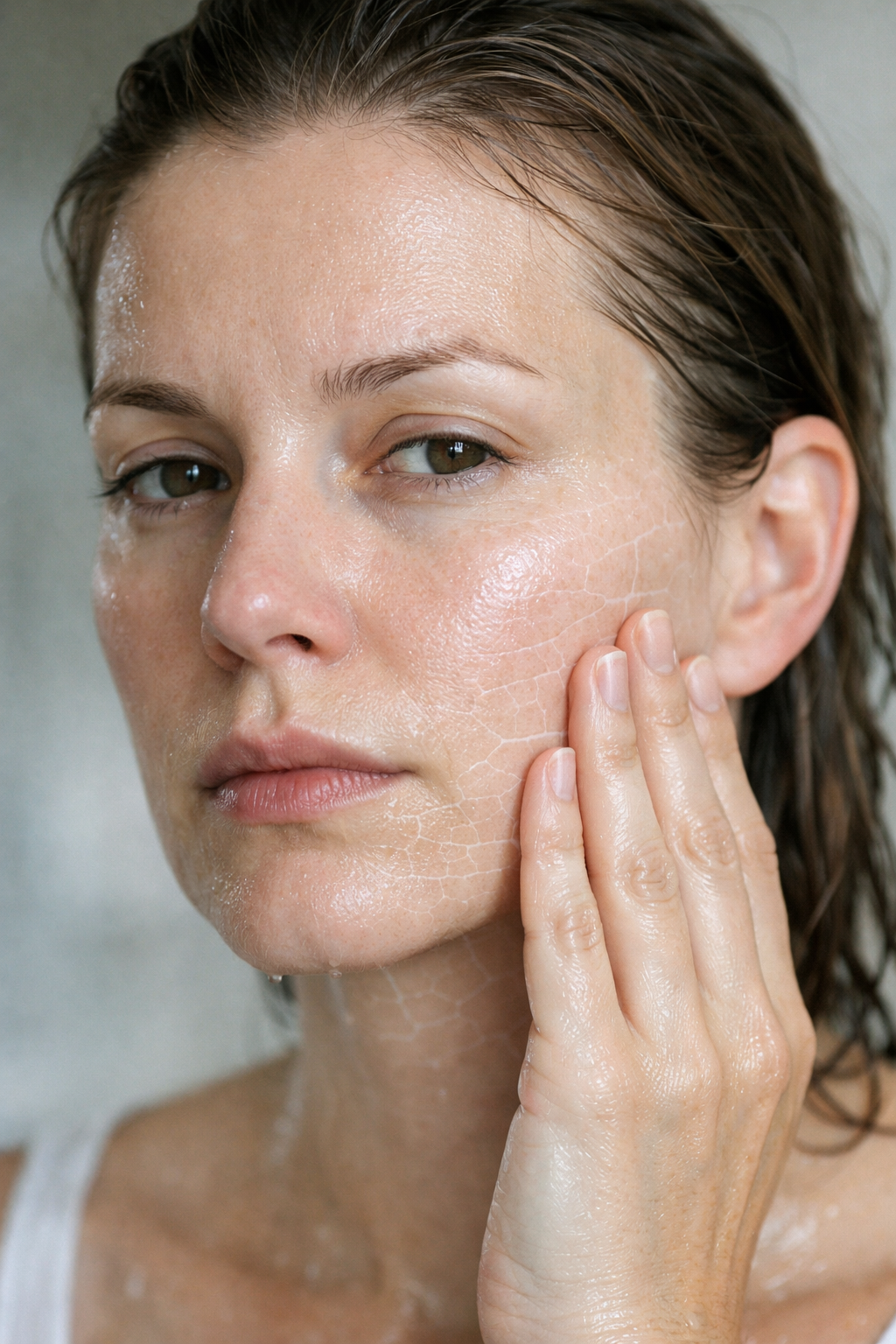
Many people notice that their skin feels very clean immediately after washing. However, within minutes, it often begins to feel tight, dry, or slightly uncomfortable.
This sensation is commonly interpreted as a sign of effective cleansing. In reality, it often indicates that essential components of the skin have been removed along with surface impurities.
A well-formulated cleanser should remove dirt, oil, and environmental residue while maintaining the skin’s natural balance. When skin consistently feels tight after washing, it suggests that the cleansing system may be disrupting this balance.
The Science Behind Skin Tightness After Cleansing
The skin barrier plays a central role in maintaining hydration and stability. It consists of skin cells supported by a lipid matrix, forming a structured system that helps retain water.
Alongside this, the skin contains natural moisturizing factors (NMF), which contribute to water retention and flexibility.
Cleansers function through surfactants—molecules that bind to oil, dirt, and impurities so they can be rinsed away. However, surfactants interact with the skin surface broadly and may also remove beneficial components such as lipids.
When this happens, the skin experiences:
- reduced lipid support within the barrier
- disruption of natural moisturizing factors
- increased transepidermal water loss (TEWL)
As a result, water escapes more easily from the skin, leading to dryness and a feeling of tightness.
Why Tightness Happens After Cleansing
The sensation of tight skin is not simply surface dryness. It reflects a change in the structural balance of the skin.
When lipids are reduced:
- the barrier becomes less cohesive
- water retention decreases
- skin loses flexibility
This creates a stretched or pulling sensation, particularly noticeable when the skin moves.
Environmental conditions such as low humidity or air-conditioned spaces can amplify this effect by increasing water loss from the skin.
Ingredient and Formulation Logic
The way a cleanser affects the skin depends on how the formulation is designed, not just on individual ingredients.
Surfactant Systems
Some cleansers rely on stronger surfactant systems designed for deep cleansing. While effective at removing oil and buildup, they may also remove essential lipids from the skin barrier.
This often results in:
- a very clean feeling immediately after use
- followed by dryness and tightness
In contrast, milder surfactant systems are designed to cleanse while maintaining better balance within the skin.
They help:
- remove impurities without excessive lipid removal
- maintain barrier stability
- reduce post-wash discomfort
Supporting Components in Formulation
Effective cleansers are structured as systems rather than single-ingredient solutions.
They often include:
- humectants that help maintain water content during cleansing
- lipid-supporting ingredients that reduce barrier disruption
- soothing components, including botanical extracts, that help regulate irritation
Botanical extracts play a supportive role by helping manage inflammation and environmental stress that can weaken the skin barrier. They do not replace structural components but contribute to overall skin stability during cleansing.
How Climate Affects Skin After Cleansing
Environmental conditions significantly influence how the skin responds to cleansing.
Hot and humid conditions
- increased sweating leads to more frequent washing
- repeated exposure to surfactants can affect lipid balance over time
Air-conditioned environments
- lower humidity increases water loss
- even mild disruption can result in noticeable dryness
Hard water exposure
- mineral residues can interact with cleansing systems
- this may affect how the skin feels after washing
Practical Understanding
The goal of cleansing is not to create a “squeaky clean” feeling, but to maintain balance.
A well-formulated face wash should:
- cleanse effectively without leaving skin tight
- support hydration during and after use
- maintain barrier comfort
When the formulation is balanced, the skin should feel clean, soft, and stable after washing.
Common Mistakes That Contribute to Dryness
Certain habits can increase the likelihood of post-cleansing tightness:
- using cleansers that are too aggressive for regular use
- washing the face too frequently
- using hot water, which can increase lipid removal
- not supporting the skin with hydration after cleansing
These factors can amplify the effects of an already unbalanced cleansing system.
Conclusion
Understanding why some face washes leave skin tight and dry comes down to how cleansing systems interact with the skin barrier.
Cleansing is not only about removing impurities, but also about maintaining the structural balance that allows the skin to retain water.
When surfactant systems are balanced with supporting components, the skin remains stable and comfortable. When this balance is disrupted, tightness and dryness are more likely to occur.
A formulation-first approach helps ensure that cleansing supports the skin rather than working against it.
Latest Posts
Continue learning how skincare works.
We explain ingredients, formulation systems, and climate-based skincare in a structured way.
10 thoughts on “Why Some Face Washes Leave Skin Tight and Dry”
Comments are closed.