
Cocoa butter is often marketed as the richest possible moisturiser, yet many people find its hydration fades within hours. This happens because richness and lasting hydration are not the same mechanism. A cream can feel heavy on application and still leave skin dry by afternoon, regardless of how thick or luxurious the texture feels in the jar.
The Problem
Many people choose a cocoa butter product expecting all-day comfort, then notice symptoms such as:
- An initial heavy feel that disappears quickly
- Skin that looks moisturised but feels tight underneath by evening
- Increased shine without matching softness
- Slow absorption that leaves a filmy residue
- Comfort that fades faster in hot, humid weather
- A greasy feel on the surface paired with dryness just beneath it
This is not simply a texture issue. It points to how this butter is structured within a formula, and whether it is paired with ingredients that actually hold water in place, rather than melting away as an oil layer alone, leaving nothing behind once it wears off.
The Science of Cocoa Butter
This plant fat is solid at room temperature and rich in stearic and palmitic acid, two long-chain saturated fatty acids that give it a firm texture at room temperature and a melting point close to skin temperature. This is why it liquefies on contact with skin rather than sitting as a hard residue, and why it feels instantly rich the moment it touches warm skin.
On its own, this fat works mainly as an occlusive, meaning it forms a film on the skin surface that slows transepidermal water loss, or TEWL, the process by which water evaporates from skin into the air. It does not add water to skin. It only slows water already present from escaping, which is a narrower job than most people assume.
This distinction matters. If skin is already dehydrated when this butter is applied, the film locks in whatever moisture is there, which may not be much. Skin can feel coated yet still be functionally dry underneath, because occlusion without prior hydration only preserves an existing deficit rather than correcting it.
Formulation Logic for Cocoa Butter
An occlusive fat performs a specific, narrow function. It cannot draw water into skin, so formulations pair this ingredient with humectants such as glycerin or sodium PCA, which pull water into the outer skin layer before the occlusive seals it in.
This butter is also used alongside lighter oils and fatty alcohols, since its own texture is dense and can feel heavy if used at high concentration without balancing lipids that spread more easily across the skin surface, particularly in warmer climates.
A point most brands skip: the ratio of occlusive to humectant determines whether a cream feels rich or actually hydrates over time. A formula loaded with this butter but low in humectants produces the exact complaint most consumers report, comfortable at first touch, disappointing by midday, because the water was never added in the first place.
Practical Advice
- Apply creams built around this butter to skin that is already damp from a hydrating toner or damp cleansing, since the occlusive layer only preserves water that is already present rather than supplying it.
- Check the ingredient list for a humectant listed near the top, such as glycerin, since this butter alone cannot supply the water it is meant to seal in.
- Use lighter applications during the day and reserve richer formulas for night, since occlusive films can feel heavy under makeup or sunscreen and may interfere with product layering.
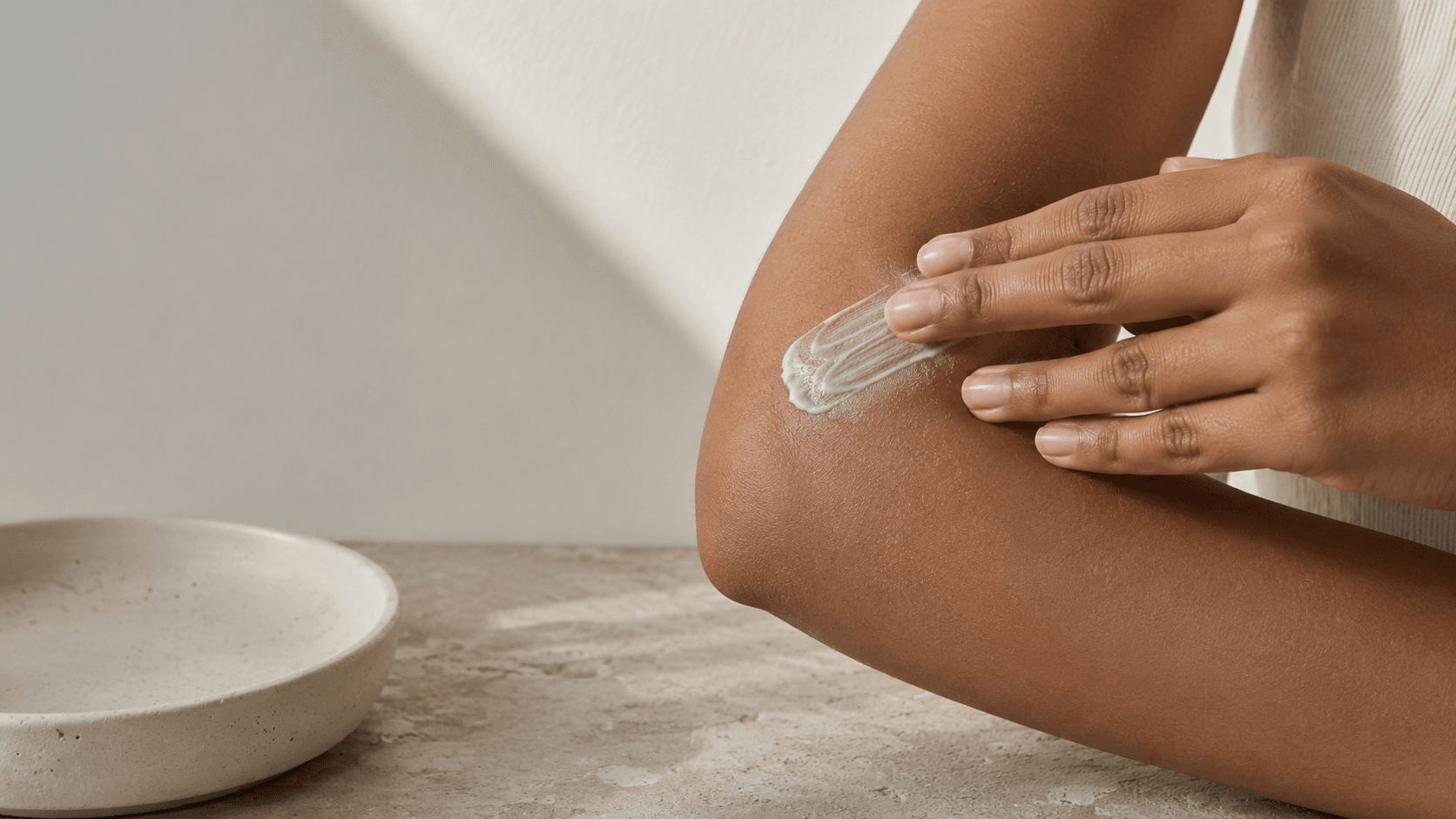
- Reapply on exposed areas such as hands and elbows after washing, since water contact removes the occlusive film faster than normal wear throughout the day.
Climate Relevance
Heat and sweat cycles common in Indian summers increase how quickly the occlusive film on the skin surface breaks down, since sweat and friction physically wear away a topical layer faster than in cooler climates, requiring more frequent reapplication than most labels suggest.
Air-conditioned rooms lower ambient humidity for extended stretches, which increases how much water skin loses even under this occlusive layer, since occlusion slows water loss but cannot stop it entirely once humidity drops sharply for hours at a time.
Hard water across much of urban India leaves mineral residue on skin after washing, which can interfere with how evenly this butter spreads and seals, leaving patchy coverage rather than a consistent barrier across the face and body.
How Nature Theory formulates
Nature Theory formulates barrier and body care systems around a defined ratio of humectants to occlusive lipids, rather than relying on this ingredient alone for perceived richness. This structural approach is designed to address both water content and water retention together. The goal is hydration that holds through Indian heat and humidity shifts, not a texture that feels rich only at the moment of application.
Summary
Cocoa butter works as an occlusive, sealing water into skin rather than adding it. A formula built on this ingredient alone can feel rich without delivering lasting hydration, since the water it seals in must already be present. Long-term comfort depends on pairing occlusive lipids with humectants in the correct ratio, not on richness alone, and that ratio matters more than how indulgent a cream feels at first touch.
FAQ
Does cocoa butter work well in humid Indian climates?
It can, but only when paired with humectants, since humidity alone does not guarantee skin retains enough water for the occlusive layer to seal in. In cities like Mumbai or Chennai, ambient humidity helps, but AC exposure indoors can offset that benefit.
Why does this butter feel heavy on oily skin?
Its dense, waxy texture sits longer on the skin surface than lighter oils, which can feel heavier on skin that already produces excess sebum. Lighter formulations balance this ingredient with faster-absorbing lipids to reduce the heavy feel.
Can this butter alone fix very dry skin?
Not reliably, since it only slows water loss and does not add water itself. Dry skin usually needs a humectant applied first, followed by this occlusive to seal that hydration in.
Is this ingredient suitable for daily use in hard water areas?
Yes, though mineral residue from hard water can interfere with how evenly it spreads. Rinsing thoroughly and applying to slightly damp skin helps it perform more consistently in hard water regions common across Delhi and Hyderabad.
Latest Posts
Continue learning how skincare works.
We explain ingredients, formulation systems, and climate-based skincare in a structured way.