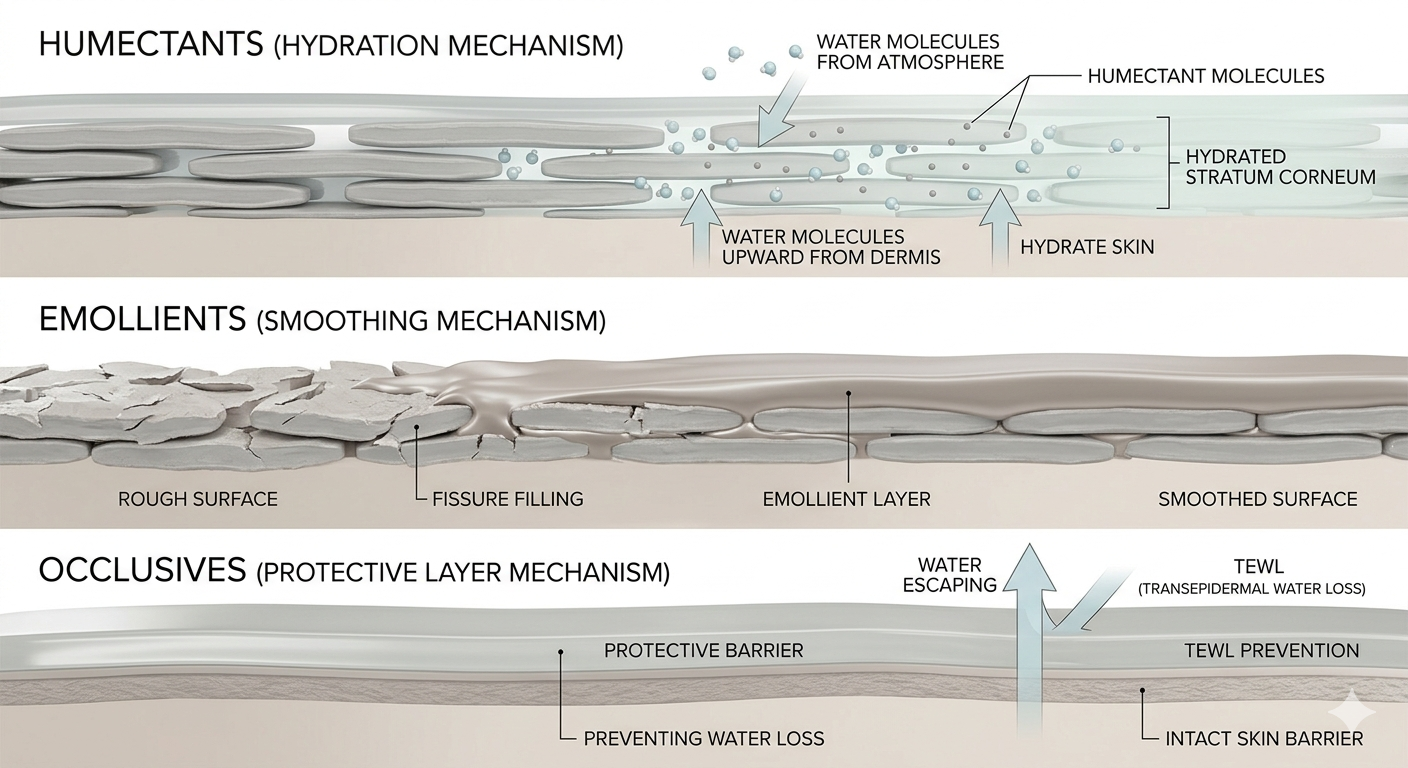
Difference Between Humectants, Emollients, and Occlusives
What is the difference between humectants, emollients, and occlusives? Learn how these three components work together to keep your skin hydrated and comfortable.
A structured library of skincare ingredients. Explains what each ingredient does, how it functions, and how it fits into formulation systems.
What is the difference between humectants, emollients, and occlusives? Learn how these three components work together to keep your skin hydrated and comfortable.
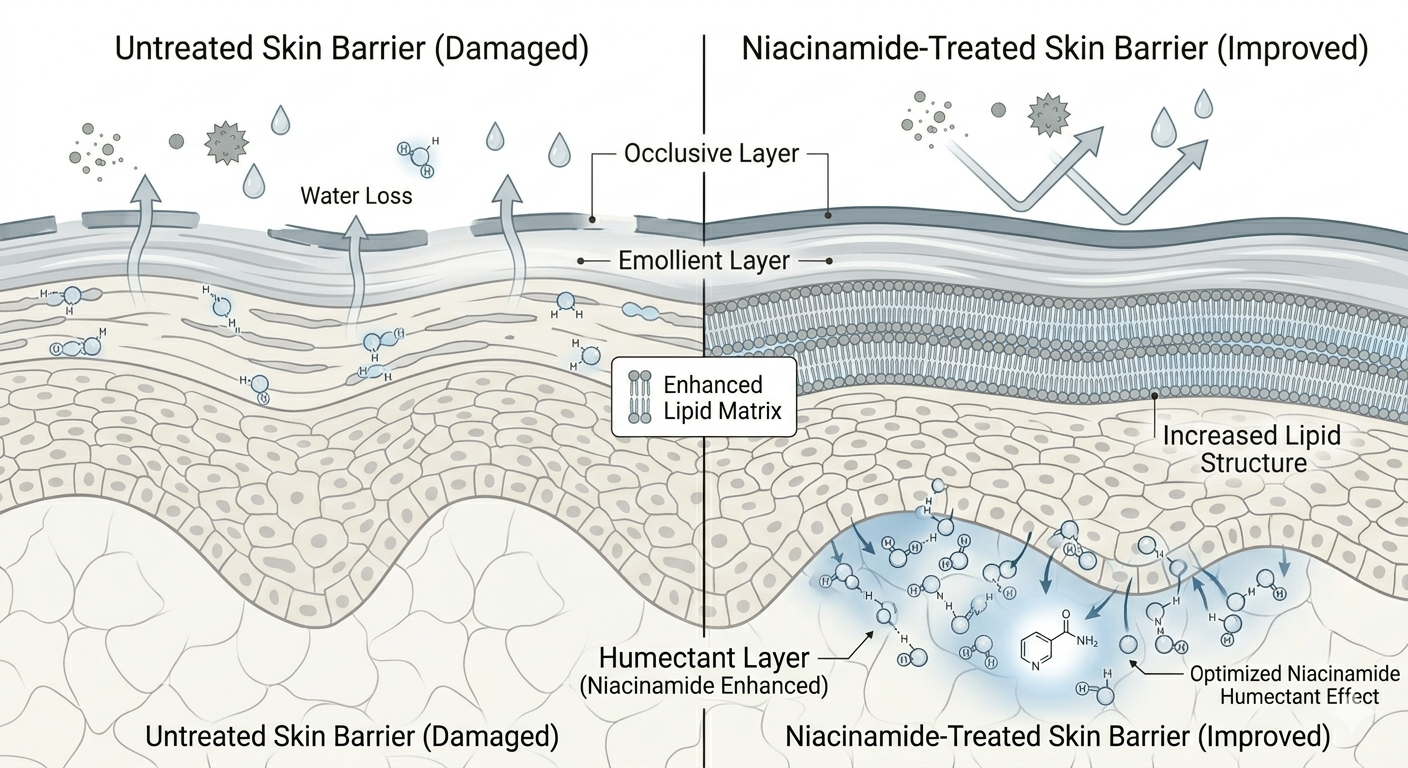
Niacinamide is often seen as a multi-benefit ingredient, but its role in skincare is more subtle and structural than most expect. Instead of delivering instant visible changes, it works by supporting the skin’s barrier, improving lipid balance, reducing water loss, and regulating oil production over time. This article explains how niacinamide functions within a formulation, why it performs best as part of a system, and how it helps maintain stable, comfortable skin in real conditions like heat, humidity, pollution, and air-conditioned environments.
The Problem Glycerin for skin is one of the most widely used approaches to improving hydration, yet the results often feel inconsistent. Skin may feel soft immediately after application, but dryness can return within hours. In some cases, the skin even feels oily while still lacking comfort. This creates a common misunderstanding: if hydration is … Read more
The Problem Many skincare products are described as “hydrating,” yet the effect often feels temporary. Skin may feel soft immediately after application, but dryness or tightness can return within a few hours. This creates a common question: 👉 If a product is hydrating, why doesn’t the effect last? The answer lies in understanding how hydration … Read more