
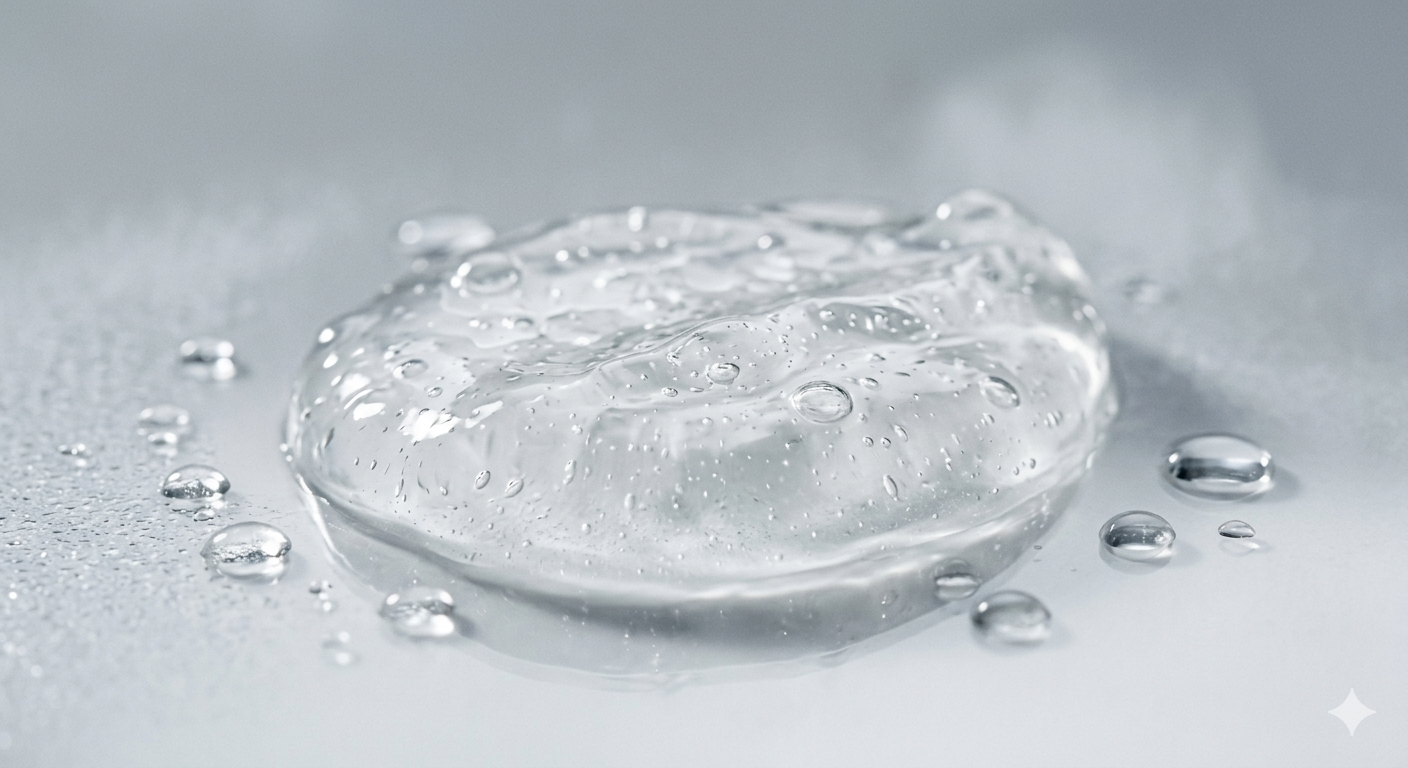
Barrier Safe Cleanser: Why Your Cleanser Might Be Damaging Your Skin
Most people judge a cleanser by how their skin feels immediately after washing.
If it feels tight, completely oil-free, and “fresh,” it must be working.
But that feeling is often a sign that your skin has lost more than it should.
Over time, this shows up in subtle ways. Skin feels dry right after washing but becomes oily again within hours. Products that once felt comfortable start causing irritation. Moisturizers stop lasting through the day.
This is not a hydration issue. It is often a cleansing issue.
What Actually Happens When You Cleanse
Your skin is not just a surface that needs cleaning. It is a structured system.
The outer layer holds together water, lipids, and natural moisturizing factors in a precise balance. This structure regulates transepidermal water loss (TEWL) and keeps skin stable through changing conditions.
Cleansers rely on surfactants to remove dirt, oil, and environmental residue. But these surfactants do not perfectly distinguish between impurities and essential skin lipids.
When the system is too aggressive, it removes both.
As a result:
- water escapes more easily
- lipid structure weakens
- skin struggles to stay hydrated
This is why skin can feel both oily and dehydrated at the same time.
Why “Gentle” Doesn’t Always Mean Barrier Safe Cleanser
The term “gentle cleanser” is widely used, but it does not describe how a formula actually behaves.
What matters is the surfactant system.
Stronger systems—often based on sulfates—are highly effective at removing oil but can disrupt the skin’s lipid structure when used daily.
Milder systems typically use combinations such as:
- glucosides
- amino acid–based surfactants
These are designed to reduce how aggressively lipids are removed.
However, no single ingredient defines a barrier safe cleanser.
A poorly balanced formula can still feel stripping, even if it uses milder surfactants. What matters is how the entire system is structured.
What Makes a Barrier Safe Cleanser
A barrier safe cleanser is not one that cleans less.
It is one that cleans selectively.
Instead of removing everything from the skin, it is designed to:
- remove sweat, pollution, and excess oil
- preserve essential lipid structure
- maintain hydration balance after washing
This is usually supported by additional formulation elements.
Humectants like glycerin help retain water during cleansing. This becomes especially important when moving between humid outdoor environments and air-conditioned indoor spaces.
Polymers and conditioning agents reduce friction and cushion the interaction between surfactants and skin.
pH also plays a role. When a cleanser is closer to skin’s natural range, the barrier recovers more efficiently after washing.
These are not visible on the label, but they determine how your skin behaves after cleansing.
How to Choose a Barrier Safe Cleanser Based on Skin Behavior
Skin type labels are often too broad to guide cleanser choice effectively.
A better approach is to observe how your skin behaves after washing.
If your skin feels tight immediately, the cleanser is likely removing too much of your lipid structure.
If your skin becomes oily quickly, it may be compensating for excessive oil removal.
If your skin feels both oily and dry, it is likely dealing with surface oil and internal dehydration at the same time.
If your skin becomes more reactive over time, repeated barrier disruption is often the cause.
In all these cases, the solution is not stronger cleansing. It is better-structured cleansing.
Cleansing in Indian Climate Conditions
In Indian cities, skin is constantly exposed to changing environments.
Outdoor humidity increases sweat and oil buildup. Pollution requires effective cleansing. Indoor air-conditioning reduces moisture and increases water loss.
This creates a cycle where people feel the need to cleanse more often, but each wash can push the skin further out of balance.
A barrier safe cleanser needs to work across all these conditions. It should be effective enough to remove buildup, but stable enough to be used repeatedly without causing dryness.
What to Look for in a Daily Barrier Safe Cleanser
Instead of focusing on marketing claims, evaluate how the cleanser performs over time.
A suitable cleanser should:
- leave skin comfortable, not tight
- not trigger rapid oiliness
- remain consistent across humidity and indoor dryness
- tolerate repeated use
Texture alone is not a reliable indicator. A gel can be harsh, and a foam can be mild. The formulation system determines the outcome.
Conclusion
Clean skin is not skin that feels stripped.
It is skin that remains balanced after washing.
A barrier safe cleanser works by removing what the skin does not need while preserving what it does.
Over time, this leads to skin that feels stable, less reactive, and more consistent through the day.
This is the standard daily cleansing should meet.
It is also the approach we follow when building cleansing systems at Nature Theory—where formulation is designed not just to clean, but to support how skin functions in real conditions.
Frequently Asked Questions
That squeaky-clean feeling after washing your face — is it actually a bad sign? Yes, for most skin types it is. That tight, completely stripped feeling means your cleanser has removed not just dirt and oil, but also the essential lipids your skin needs to hold moisture in. Clean skin should feel comfortable and balanced after washing — not like it urgently needs a moisturiser to feel normal again. If you feel that tightness every time you wash, your cleanser is taking more than it should, and your skin barrier is paying the price every single day.
Can your face wash be the reason your skin is getting worse — even if you use good moisturisers? Yes, and this is one of the most overlooked causes of problem skin. You can use the best moisturiser in the world, but if your cleanser is stripping your barrier twice a day, the moisturiser is just trying to undo damage that keeps happening. It’s like trying to fill a bucket with a hole in it. The skin gets disrupted during cleansing, the moisturiser patches it temporarily, and the cycle repeats. Fixing the cleanser — not adding more moisturiser — is usually the actual solution.
What does “barrier safe cleanser” actually mean in plain terms? It means a cleanser that removes what your skin doesn’t need — sweat, pollution, excess oil, sunscreen — without also removing what it does need — the natural lipids and moisture factors that keep the barrier intact. A barrier safe cleanser cleans selectively. It’s not about cleaning less thoroughly. It’s about cleaning more intelligently, so your skin is genuinely balanced after washing rather than just feeling temporarily fresh and then falling apart within an hour.
Are sulfate-free cleansers automatically safer for your skin barrier? Sulfate-free is a useful starting point but not the full story. Sulfates like SLS are strong surfactants that strip lipids aggressively — removing them from a formula helps. But a sulfate-free cleanser can still be poorly formulated and disruptive if the alternative surfactants are too harsh, used at too high a concentration, or not balanced with other ingredients. The absence of sulfates matters, but what replaces them and how the whole formula is put together is what actually determines whether it’s barrier safe.
What surfactants are actually gentle — and what should you look for on the ingredient list? Two surfactant types are generally considered milder and more barrier friendly. Glucosides — like coco-glucoside or decyl glucoside — are derived from natural sugars and clean effectively with lower irritation potential. Amino acid-based surfactants — like sodium lauroyl glutamate or sodium cocoyl glycinate — are considered among the gentlest available and are especially good for sensitive or barrier-compromised skin. Seeing these near the top of a cleanser’s ingredient list is a positive sign. Seeing sodium lauryl sulfate or ammonium lauryl sulfate near the top is a sign to be cautious.
Why does your skin feel oily again just an hour after washing — even though you cleansed properly? This is your skin compensating for over-cleansing. When a cleanser strips your skin’s natural oils repeatedly, your sebaceous glands respond by producing more oil to try to re-protect the barrier. The more aggressively you cleanse, the more oil your skin produces in response. So you wash to control oiliness, the oiliness gets worse, you wash more — and the cycle continues. Switching to a milder, barrier-safe cleanser often brings oil production back to a more balanced level within a few weeks because your skin stops feeling the need to compensate.
Does pH of a cleanser actually matter — or is that just marketing? It genuinely matters. Your skin’s surface has a natural pH of around 4.5 to 5.5 — slightly acidic. This acidity is important because it supports the enzymes that maintain the skin barrier and keeps the microbiome balanced. Many cleansers — especially soap bars — have a much higher pH, closer to 8 or 9. Using a high-pH cleanser daily shifts your skin’s surface out of its natural range, and it takes time to recover. Over repeated use, this disruption accumulates. A cleanser with a pH closer to your skin’s natural range causes less disruption and allows your barrier to recover more efficiently after washing.
Is washing your face twice a day too much — should you cut back? Twice a day is generally appropriate, but only if your cleanser is gentle enough for that frequency. The problem isn’t the number of washes — it’s the cumulative damage from using a disruptive cleanser twice daily, every day. A barrier-safe cleanser used twice a day causes far less damage than a harsh cleanser used once. Many people who switch to a gentler cleanser find that their skin actually handles twice-daily washing fine — because the barrier is no longer being compromised with each wash. Reducing frequency is a workaround; using the right cleanser is the actual fix.
Why does skin in India seem to need cleansing more but also feel more sensitive after cleansing? Because Indian skin faces a uniquely demanding daily cycle. You go outside into heat, humidity, and pollution — which builds up sweat, oil, and particulate matter on the skin quickly, making effective cleansing necessary. But then air conditioning creates very dry indoor air that increases water loss, making the skin more fragile. A cleanser that’s harsh enough to deal with that outdoor buildup often does too much damage in conditions where the skin is already losing moisture rapidly indoors. This is why a barrier-safe cleanser that can do both — cleanse effectively and leave the barrier intact — matters more in Indian conditions than in more stable climates.
How do you know if your cleanser is damaging your barrier — without getting a lab test? Observe four things over two to three weeks. First — how your skin feels immediately after washing: tightness means too much lipid removal. Second — how quickly oiliness returns: fast return means your skin is compensating for over-stripping. Third — how your skin reacts to products it used to tolerate: new stinging or irritation from familiar products points to barrier disruption. Fourth — whether your skin is getting more reactive or sensitive over time rather than better. If two or more of these are true for you, your cleanser is very likely contributing to the problem. Try switching to a genuinely gentle formula for four weeks — if your skin stabilises, the cleanser was the issue all along.
Latest Posts
Continue learning how skincare works.
We explain ingredients, formulation systems, and climate-based skincare in a structured way.