
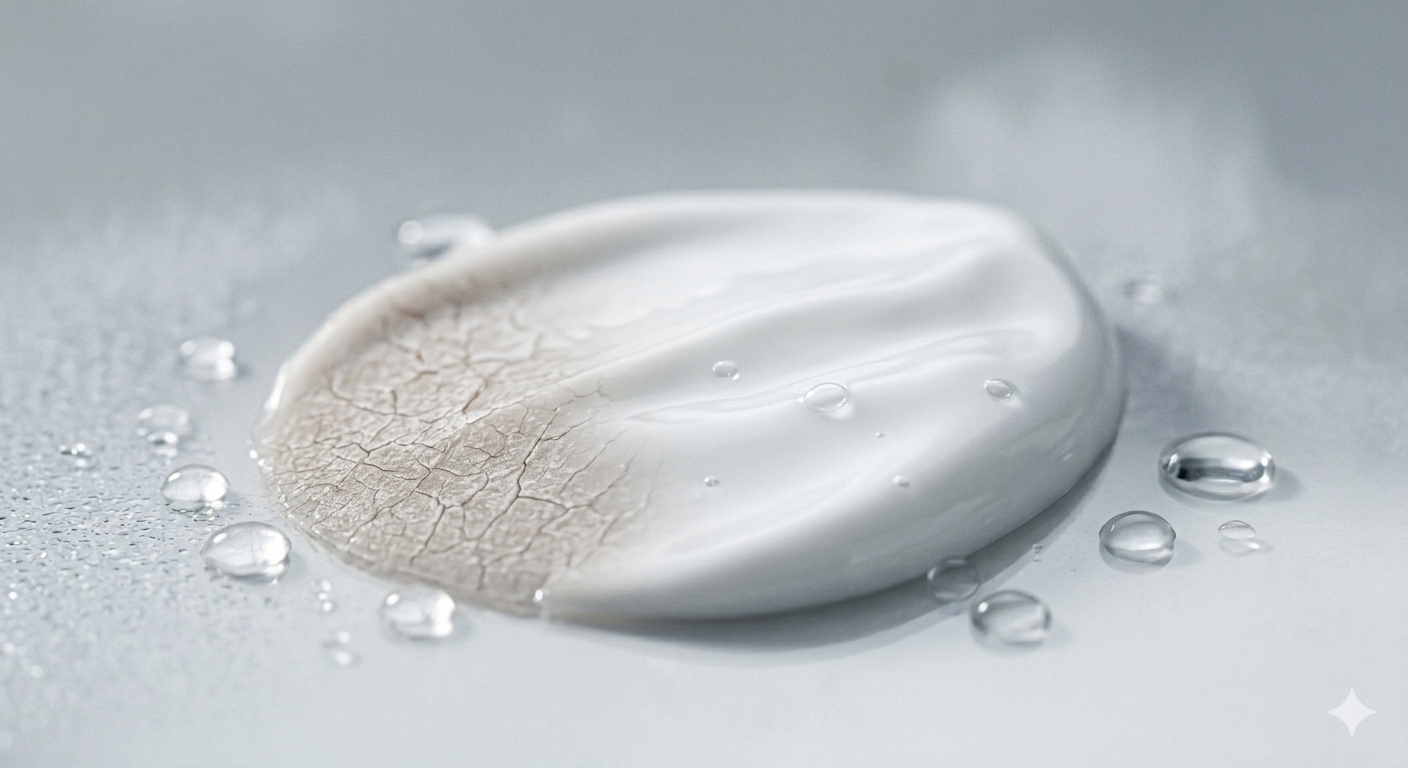
Barrier Repair Cream for Dry Skin: How to Choose the Right One
Most people think dry skin means one thing: not enough moisture.
So the solution seems obvious—use a thicker cream.
But if you’ve tried that, you’ve probably noticed something.
Your skin feels better for a while.
Then the dryness comes back.
This happens because dry skin is not just about adding moisture.
It’s about how well your skin holds on to it.
Why Moisture Alone Doesn’t Fix Dry Skin
Your skin has a natural barrier that controls how water moves in and out.
This barrier is made up of lipids, skin cells, and natural moisturizing factors working together as a system.
When this system is strong, your skin can retain hydration.
When it is weakened:
- water escapes easily
- dryness returns quickly
- skin feels tight even after moisturizing
This is why some creams feel good at first but don’t last.
What a Barrier Repair Cream Actually Does
A good barrier repair cream doesn’t just sit on the surface.
It helps your skin retain hydration over time.
To do this, the formulation needs to work on multiple levels.
It brings water into the skin
Ingredients like glycerin attract water and improve hydration.
But this only works well if your skin can hold that water.
It supports the skin’s lipid structure
Your barrier depends on lipids like ceramides, cholesterol, and fatty acids.
These work together to form a stable structure.
It’s not about adding just one of them.
It’s about how they are balanced in the formula.
When this structure is supported, water loss reduces.
It improves how skin feels and behaves
Some ingredients smooth the skin and reduce roughness.
Others create a light protective layer that slows down water loss.
Too little protection, and hydration escapes.
Too much, and the skin can feel heavy or uncomfortable—especially in humid weather.
The goal is balance.
Why Climate Matters More Than You Think
Dry skin doesn’t behave the same everywhere.
In Indian conditions, your skin is constantly shifting between environments.
Outside, humidity and heat increase sweat and oil.
Inside, air-conditioning reduces moisture and increases dryness.
This creates a pattern where:
- skin feels dry after cleansing
- creams don’t last through the day
- reapplication becomes frequent
A good barrier repair cream should work in both conditions—not just one.
How to Know If Your Cream Is Actually Working
Instead of focusing on labels like “intense hydration,” look at how your skin responds.
When a cream is working, you’ll notice:
- less tightness after washing
- hydration lasting for several hours
- smoother, more comfortable skin over time
When it’s not working:
- dryness returns quickly
- you feel the need to reapply often
- skin feels “wet but still dry” or overly greasy
This usually means the formulation is not balanced for your skin or environment.
A More Practical Way to Choose
Choosing a barrier repair cream is not about finding the richest texture.
It’s about finding a formulation that:
- supports your skin barrier
- holds hydration through the day
- works across humidity and indoor dryness
Barrier repair is not instant.
As your skin structure improves, hydration becomes more stable and consistent.
Conclusion
Dry skin is not just a moisture problem.
It is a barrier problem.
A good cream does more than make your skin feel better for a few hours.
It helps your skin stay balanced over time.
Because effective skincare is not about adding more.
It is about helping your skin function better.
This is the approach we follow when designing barrier-focused formulations at Nature Theory—where hydration is not just added, but maintained.
Frequently Asked Questions
You’ve tried every thick cream out there — so why is your skin still dry? Because dry skin is not just a moisture problem — it’s a barrier problem. Adding more moisture only helps if your skin can actually hold onto it. When your skin barrier is weakened, water escapes faster than any cream can replace it. So your skin feels better for an hour or two, then the dryness comes right back. The cream isn’t failing because it’s not rich enough. It’s failing because it’s not addressing why the moisture is leaving in the first place.
What is a barrier repair cream and how is it different from a regular moisturiser? A regular moisturiser mostly adds water and oils to the surface of your skin and makes it feel temporarily better. A barrier repair cream goes a step further — it actively supports the lipid structure that keeps your skin barrier intact. This means including ingredients like ceramides, fatty acids, and cholesterol that your skin barrier is literally made of. When these are replenished in the right balance, your skin gets better at holding hydration on its own — not just while the product is sitting on it.
What are ceramides and why do they keep showing up in barrier repair creams? Ceramides are lipids — fats — that are a natural part of your skin’s barrier structure. Think of your skin barrier like a brick wall: the skin cells are the bricks and ceramides are part of the mortar holding everything together. When ceramide levels drop — due to ageing, harsh cleansers, pollution, or overuse of actives — the wall develops gaps. Water escapes through those gaps and irritants get in more easily. A barrier repair cream that includes ceramides is literally helping rebuild the mortar in that wall.
Does barrier repair cream need ceramides specifically — or do other lipids work too? Ceramides alone are not enough. Your skin barrier is made of a specific ratio of ceramides, cholesterol, and fatty acids working together. Research shows that when all three are present in roughly the right balance, barrier repair happens more effectively than with ceramides alone. A product that only highlights ceramides on the label but ignores the other two lipids may help partially but won’t rebuild the barrier as effectively as one with a balanced lipid system. The combination matters more than any single ingredient.
Why does a thick, heavy cream still leave dry skin feeling tight after a few hours in India? Two reasons specific to Indian conditions. First, the cream may be heavy on occlusives — it seals well — but low on humectants, so it’s sealing in very little moisture to begin with. Second, the constant shift between humid outdoor air and dry air-conditioned interiors pulls moisture out of your skin at a rate that a poorly formulated cream can’t keep up with. A cream that works in cooler, more stable climates may simply not be built for the level of environmental change Indian skin deals with daily.
How long does it actually take for a barrier repair cream to work? Real barrier repair takes time — typically four to six weeks of consistent use. The first week or two, you’ll mostly notice surface improvement: skin feels less tight, less rough, less uncomfortable immediately after washing. Around weeks three and four, the deeper improvement starts showing — hydration lasts longer during the day, your skin reacts less to environmental changes, and you find yourself needing to reapply less often. Full barrier repair for significantly compromised skin can take two to three months. Expecting results in three days means you’ll always be disappointed and always switching.
Can you repair your skin barrier without a dedicated barrier cream — using just a regular moisturiser? Sometimes, if your barrier damage is mild and your regular moisturiser happens to contain the right lipids in reasonable amounts. But most standard moisturisers are not formulated with barrier repair as the primary goal — they’re formulated for comfort and surface hydration. If your skin is consistently dry, reacts easily, takes a long time to recover after cleansing, or has been getting progressively more sensitive over time, a moisturiser designed specifically for barrier repair will work faster and more effectively than a general-purpose one.
Is barrier repair cream only for dry skin — or can other skin types need it too? Any skin type can have a damaged barrier — including oily and combination skin. Signs of a damaged barrier are not limited to dryness. Sudden increased sensitivity, skin that stings when you apply products that never bothered you before, persistent redness, or skin that has become more reactive after using strong actives — these are all barrier damage signs regardless of your skin type. Oily skin with a damaged barrier might need a lighter barrier repair formula, but the need for repair itself is the same.
Should you use barrier repair cream morning and night — or just at night? Both, ideally — but especially at night. At night, your skin goes into repair mode naturally, and barrier repair ingredients work with this process. Applying a barrier repair cream at night maximises the window when your skin is actively recovering. In the morning, a lighter application helps protect the barrier through the day’s environmental exposure. If the cream feels too heavy for daytime in Indian summers, use a lighter formulation in the morning and save the richer barrier cream for your evening routine.
How do you know if your skin barrier is actually damaged — and not just dehydrated? Dehydration is a moisture level problem — your skin lacks water. Barrier damage is a structural problem — your skin can’t hold onto water properly. The key difference is in the pattern. Dehydrated skin feels dry but responds well to moisturising and feels better for several hours. Damaged barrier skin moisturises briefly then goes right back to being tight, dry, or sensitive within an hour or two. It also becomes increasingly reactive — products that used to feel fine start to sting or irritate. If your skin has been getting progressively more sensitive and no amount of moisturising is making a lasting difference, barrier damage is the more likely issue than simple dehydration.
Latest Posts
Continue learning how skincare works.
We explain ingredients, formulation systems, and climate-based skincare in a structured way.
2 thoughts on “How to Choose a Barrier Repair Cream for Dry Skin (That Actually Works)”
Comments are closed.