
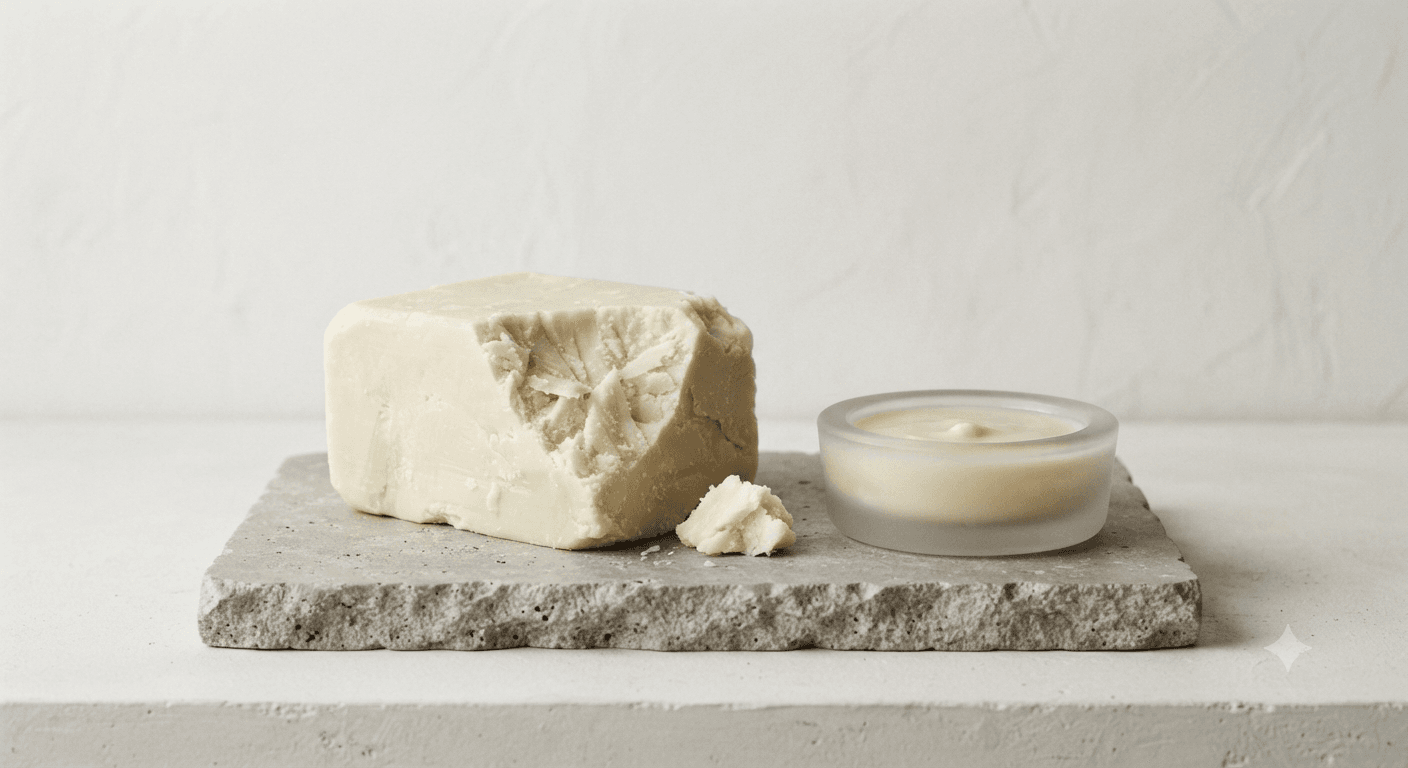
Kokum Butter is included in some night creams for its structural properties, not simply because it is a butter. It is unusually hard at room temperature, which changes how a lipid phase behaves during both manufacturing and application. That hardness is the actual reason it appears in a formula.
Why Butters Are Often Chosen Without Understanding Their Role
Many ingredient lists include butters without explaining why one butter was chosen over another. Shea, mango, cocoa, and kokum are frequently grouped together as if they are interchangeable.
Common misconceptions include:
- Assuming any butter adds the same richness to a formula
- Believing a harder butter is simply a heavier or greasier one
- Expecting a butter’s benefit to come from its scent or origin story
- Overlooking melting point as a functional formulation detail
Butters differ significantly in fatty acid composition and melting behavior. Treating them as interchangeable ignores the reason a formulator picked one over another in the first place.
The Science Behind Kokum Butter
Kokum Butter is extracted from the seeds of Garcinia indica and is notably harder and more brittle at room temperature than shea or mango butter. This hardness comes from a fatty acid profile weighted toward stearic and oleic acid.
Melting point is a key property here. Kokum Butter has a relatively high melting point, close to normal skin temperature. This means it stays solid in the jar but melts on contact with skin, rather than feeling greasy from the moment it is applied.
A harder fat also tends to have better oxidative stability than a softer one, since a more tightly packed molecular structure resists oxygen exposure slightly better over time. This is relevant to shelf life in a finished product, alongside whatever preservation system is used.
None of this makes this butter inherently superior to other butters. It makes it functionally different, which is what determines where it fits in a formula.
How This Butter Fits Within a Multi-Lipid System
This butter is rarely the only structural lipid in a formula. In a night cream lipid phase, it is typically combined with a softer butter and one or more lighter oils, each contributing a different texture property.
A softer butter alone can leave a lipid phase feeling unstable or overly soft at warmer storage temperatures. A harder butter alone can feel stiff or slow to melt on skin. Combining the two balances structure against spreadability.
The nuanced point most explanations skip: a butter’s hardness affects manufacturing as much as final skin feel. Harder fats require higher melting temperatures during production and more controlled cooling to avoid a grainy or unstable finished texture, which is a manufacturing detail that shapes formulation choices as much as any consumer-facing benefit does.
How to Evaluate a Formula That Lists This Butter
- Check what other lipids appear alongside it, since this butter is designed to work within a blend, not to perform alone.
- Note whether the product is a night formula, since harder, higher-melting butters are more common in richer overnight textures than in daytime products.
- Do not judge richness by ingredient order alone, since a small percentage of a hard butter can meaningfully change texture without dominating the formula.
- Expect a firmer texture in the jar that softens on contact with skin, rather than a soft, spreadable butter straight out of the container.
Climate Relevance for Indian Skin
Heat and sweat cycles through most of the Indian year affect how any lipid-rich formula performs in storage, particularly in bathrooms without climate control. A harder, more oxidatively stable butter holds its texture better under repeated heat exposure than a softer butter alone would.
AC exposure through the day or night can leave skin drier at the surface even when humidity outdoors is high. A structural butter with a body-temperature melting point supports a richer overnight formula suited to this kind of surface dryness without requiring a heavier overall lipid load.
Monsoon and humidity shifts change how a lipid phase is perceived on skin week to week. A well-structured multi-lipid system, rather than one heavy butter alone, helps a formula feel consistent whether the surrounding air is dry or humid.
Where This Fits Into a Night Formula
Nature Theory includes Kokum Butter within a multi-lipid structural system used in its night formula, alongside a softer butter and lighter oils. The combination is chosen for how the lipids behave together during manufacturing and on skin, not for any single butter’s individual reputation. This reflects a formulation-first approach to building lipid architecture.
Summary
Kokum Butter earns a place in a night formula because of its hardness, high melting point, and oxidative stability, not because it is simply another butter on an ingredient list. Its role is structural, balancing softer lipids within the same formula rather than replacing them. Function, not origin, is what determines whether an ingredient belongs in a system.
Frequently Asked Questions About Kokum Butter
Is Kokum Butter better than shea butter for skin?
Neither is inherently better. They behave differently due to fatty acid composition and hardness, which is why formulas often combine them rather than choosing one over the other.
Does this butter feel heavy or greasy on skin?
On its own it can feel firm, but its high melting point means it softens quickly on contact with skin. Within a balanced formula, it does not typically feel greasy.
Is this butter suitable for use in humid cities like Chennai or Mumbai?
Yes, when used within a balanced multi-lipid system. Its structural role supports formula stability rather than adding excess richness that would feel heavy in humid conditions.
Why is this butter more common in night creams than day creams in Indian skincare?
Its higher melting point and structural hardness suit richer overnight formulas better than lightweight daytime textures. Day formulas generally prioritize faster absorption over structural richness.
Latest Posts
Continue learning how skincare works.
We explain ingredients, formulation systems, and climate-based skincare in a structured way.