
Panthenol appears on more ingredient lists than almost any other active — face washes, moisturisers, serums, and even cleansers. Most people who read the name on a label have no clear picture of what it does. It is not a trend ingredient, it does not carry a dramatic claim, and it rarely appears on the front of packaging. That quietness is exactly why formulators trust it: panthenol skin function is consistent, well-documented, and works at more than one level inside the skin simultaneously.
The Problem: Skin That Hydrates But Never Quite Settles
There is a particular kind of skin frustration that is hard to name because it is not dramatic. The skin does not break out. It does not peel visibly. It just never settles into comfort — and the moisturiser you are using does not seem to fully solve it.
- Skin feels soft immediately after applying a product but becomes tight or dry within a few hours
- Minor irritation — a faint sting, a subtle sensitivity when applying other products — that persists without a clear cause
- Dry patches that seem better after a day routine but return overnight
- Skin that heals slowly from small disruptions — a patch of friction, a reaction to hard water, a day of over-cleansing
- Products that feel hydrating in humid outdoor air but leave skin dry after an hour in an air-conditioned room
These experiences usually point to a barrier that is working but under-supported — not damaged enough to produce obvious symptoms but not stable enough to hold hydration consistently through the day. This is precisely the territory where panthenol skin function is most relevant.
The Science: What Panthenol Actually Does Inside the Skin
To understand why panthenol works across so many different products and skin concerns, you need to understand that it does two separate things — one at the surface and one deeper inside the skin.
What Panthenol Is
Panthenol is the alcohol form of vitamin B5, which is also called pantothenic acid. It is water-soluble, stable in most formula types, and absorbs easily into the outer skin layer. Once inside the skin, enzymes convert panthenol into pantothenic acid — and this conversion is where the more significant function begins.
Pantothenic acid is a building block for coenzyme A — a molecule that is involved in many metabolic processes inside skin cells, including the production of fatty acids and ceramides. Ceramides are a key part of the lipid matrix in the stratum corneum — the outermost layer of skin. Think of the stratum corneum as a wall: the skin cells are the bricks, and the lipid matrix holding them together is the mortar. When that mortar is organised and intact, water stays inside the skin and irritants stay out. Panthenol, through its conversion chain, helps provide the raw material the skin needs to maintain and rebuild that mortar.
Humectant Function at the Surface
Before that conversion happens, panthenol itself acts as a humectant in the outer skin layers. A humectant is an ingredient that attracts water molecules and holds them in the skin. Panthenol draws moisture into the stratum corneum and helps reduce transepidermal water loss — known as TEWL — which is the passive evaporation of water from the skin into the surrounding air.
This dual function — immediate humectant action at the surface, plus deeper metabolic support through vitamin B5 — is what separates panthenol from most other hydration ingredients. Glycerin, for example, is an excellent humectant but does not participate in cellular repair. Sodium hyaluronate attracts water but does not feed into lipid synthesis. Panthenol does both, which is why it appears across more product types than either of those two.
Barrier Repair and Cell Renewal
Pantothenic acid, the form panthenol converts into, supports the production and energy metabolism of keratinocytes — the primary cells of the outer skin layer. When the barrier is disrupted by cleansing, friction, or environmental stress, keratinocytes need to divide and migrate to close the disruption. Pantothenic acid is part of the energy pathway that powers this process. This is the mechanism behind panthenol’s well-established reputation for supporting skin recovery. It is not reducing inflammation directly in the way a dedicated anti-inflammatory ingredient would. It is providing the cellular fuel that allows the skin’s own repair process to run more efficiently.
Film Formation and Surface Comfort
Panthenol also forms a thin, flexible film on the skin surface. This film is not heavy or occlusive — it does not seal the skin the way a thick butter would. Instead, it adds a degree of surface smoothness that reduces friction, supports comfortable product layering, and provides a mild buffer against immediate surface stress. This film-forming quality is part of why panthenol in a rinse-off cleanser is not wasted: a residual comfort layer persists on the skin even after rinsing.
Formulation Logic: How Panthenol Skin Function Works in a Formula
Understanding what panthenol does makes it easier to understand why it needs to be part of a system — not used alone. Its effectiveness depends significantly on what surrounds it in the formula.
In Cleansing Systems
Every cleanse creates a brief disruption window. Even mild surfactants remove some surface moisture and temporarily reduce the lipid layer at the skin surface. Including panthenol in a cleanser addresses two things: it maintains surface moisture during the wash, and it leaves a comfort film on the skin after rinsing that reduces the post-cleanse tightness that occurs before moisturiser is applied.
In rinse-off formulas, panthenol functions well at concentrations from 0.5 to 1 percent. At these levels the humectant and film-forming effects are functional, not decorative. The contact time is shorter than in leave-on products, but the residual film is meaningful — particularly in hard water environments where mineral residue from the tap adds extra surface stress after rinsing.
In Moisturisers and Serums
In leave-on formulas, panthenol sits within a broader humectant network alongside glycerin, sodium PCA, and sodium hyaluronate. Each humectant operates somewhat differently — glycerin has high water-binding efficiency, sodium PCA is a component of the skin’s own natural moisturising factor, and sodium hyaluronate provides multiple molecular weights of hydration depth. Panthenol’s additional contribution in this context is its film-forming quality, which helps the humectant network stay on the skin rather than evaporating with surface moisture. It also adds a subtle slip to formula texture that improves how layers absorb.
The concentration point that most ingredient discussions miss: clinical data on panthenol formulations shows that around 1 percent in a well-designed emulsion can meaningfully reduce TEWL and improve stratum corneum hydration. Higher concentrations — up to 5 percent — show benefit, but the effect does not increase proportionally with concentration. A 1 to 2 percent panthenol formula in a well-constructed humectant-lipid system will frequently outperform a higher percentage in a weak or unbalanced base. The surrounding system matters as much as the amount.
Why Panthenol Needs Lipid Support
This is the point most blogs miss entirely. Panthenol attracts water to the skin surface. But in low-humidity environments — air-conditioned rooms, dry outdoor conditions in winter, fan-cooled spaces — the water attracted by humectants including panthenol can evaporate if there is nothing to slow that evaporation. The lipid layer in a moisturiser is what holds the moisture attracted by the humectant network in place. Without lipid-support ingredients — squalane, plant oils, shea butter — panthenol’s hydration effect is shorter-lived than it should be. In a well-formulated product, the humectant and lipid systems are designed together, not as an afterthought.
Practical Advice: What to Do
- Look for panthenol in both your cleanser and your leave-on products — in a cleanser it reduces post-wash dryness and leaves a comfort film; in a moisturiser or serum it contributes to the humectant network and longer-term barrier repair.
- Apply panthenol-containing leave-on products to slightly damp skin — humectants work most effectively when some surface moisture is present to bind, rather than pulling from deeper layers.
- Pair panthenol with a formula that also contains lipid-support ingredients — squalane, jojoba oil, or shea butter — to prevent the humectant layer from losing moisture to evaporation, especially in AC rooms or dry indoor environments.
- Use panthenol-containing products after high-stress days — heavy sun exposure, travel, pollution, or days when you have cleansed more than usual — because these are the conditions under which barrier repair support is most needed.
- Be consistent rather than using high concentrations occasionally — daily use of a well-formulated product at a moderate panthenol level builds barrier support cumulatively across the skin’s turnover cycle, which takes four to six weeks.
Morning: gentle cleanser with panthenol → damp skin application of humectant serum → moisturiser with lipid support → sunscreen.
Evening: gentle cleanser → panthenol-containing serum or essence → night cream with lipid architecture. The evening application is particularly useful for overnight barrier repair, when the skin’s own renewal process is most active.
Climate Relevance: Why Panthenol Skin Function Matters in Indian Conditions
Hard Water and Post-Cleanse Recovery
In many Indian cities, tap water contains elevated calcium and magnesium ions. These minerals interact with surfactants and can leave a residue on the skin surface after rinsing — contributing to tightness and reducing how well subsequent products absorb. Panthenol in the cleanser formula and in the first leave-on product applied after washing helps counteract this. The comfort film panthenol leaves on the skin reduces the impact of mineral residue on the surface. It does not remove the minerals, but it reduces the barrier disruption they cause before the moisturiser step.
Heat, Sweat Cycles, and Frequent Cleansing
Indian summers push many people to cleanse two or three times a day to manage sweat and pollution. Each additional cleanse is an additional disruption window for the barrier. Panthenol’s film-forming function is relevant here because it partially restores the comfort layer that each wash removes. A cleanser that includes panthenol at functional concentrations reduces the cumulative surface stress of frequent washing more effectively than a surfactant-only formula.
The conversion of panthenol into pantothenic acid inside the skin also supports the accelerated cell turnover that repeated cleansing can trigger. When the skin is cycling faster in response to frequent surface disruption, the metabolic support that pantothenic acid provides to keratinocyte energy production becomes functionally meaningful.
AC Exposure and Overnight Dehydration
Air-conditioned bedrooms and offices reduce indoor humidity to 30 to 45 percent in many Indian homes and workplaces. At these humidity levels, the atmospheric moisture available for humectants to draw into the skin is limited. Panthenol’s film-forming quality becomes more important than its humectant function in these conditions — the film slows surface evaporation even when external humidity is too low to support active water attraction. This makes panthenol more consistently useful across India’s indoor-outdoor humidity shifts than glycerin-only humectant systems, which depend more heavily on ambient moisture availability.
Urban Pollution and Chronic Low-Level Barrier Stress
Daily pollution exposure in Indian cities creates a low-level, ongoing form of barrier stress. Particulate matter settles on the skin, interacts with sebum and surface lipids, and generates oxidative activity that gradually degrades barrier integrity. Panthenol’s support for keratinocyte renewal is relevant here — the skin is continuously replacing barrier cells that are under environmental pressure, and the metabolic support pantothenic acid provides helps that replacement process run without deficit. A routine that includes panthenol consistently offers ongoing support for this process rather than addressing it only when visible disruption occurs.
The Nature Theory Approach
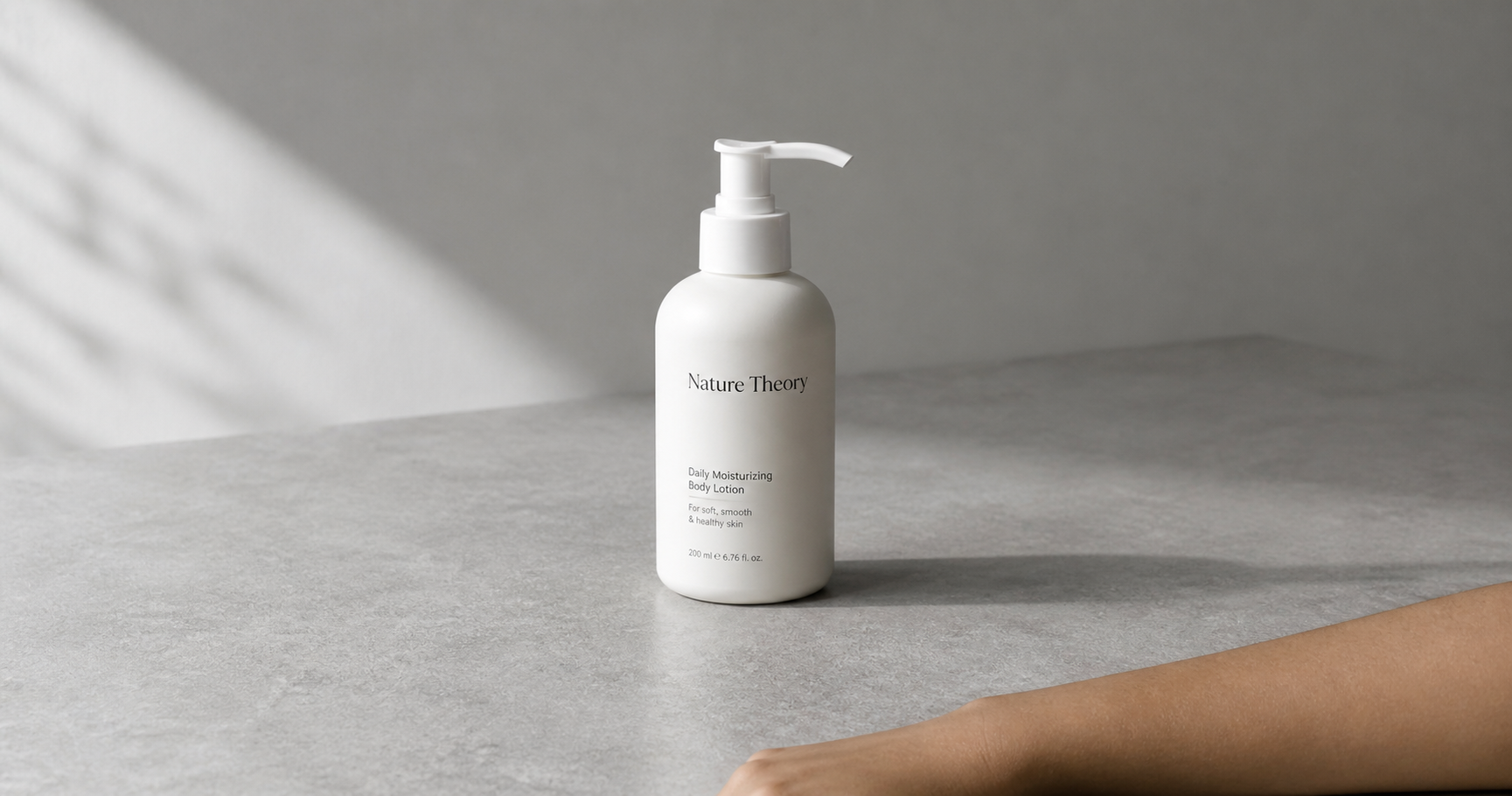
At Nature Theory, panthenol is included across both rinse-off and leave-on formulas as part of a structured humectant and barrier-support system — not as a single highlighted active. In the mild surfactant cleansing system, panthenol works alongside glycerin and sodium PCA to maintain surface hydration during washing and provide a functional comfort film after rinsing, reducing the disruption window between cleansing and moisturiser application. In leave-on formulas, panthenol sits within the humectant network at concentrations designed to support TEWL reduction and barrier recovery, combined with a lipid architecture that holds the attracted moisture in place. The goal is consistent barrier comfort across the full daily routine — not a single dramatic result from one ingredient — which is the context in which panthenol performs most reliably over time.
Summary
Panthenol works in the skin through two distinct mechanisms. As a humectant and film-former in the outer skin layers, it attracts and holds moisture at the surface and reduces immediate post-cleanse dryness. As a precursor to vitamin B5 inside skin cells, it feeds into the production of fatty acids and ceramides — the structural components of the barrier lipid matrix — and supports the energy metabolism that powers barrier cell renewal.
Clinical data shows that panthenol at around 1 percent in a well-designed formula can measurably reduce TEWL and improve stratum corneum hydration. The surrounding formula matters as much as the concentration: panthenol in a formula that also includes lipid-support ingredients performs better than the same amount in a humectant-only base, because the lipids hold the attracted moisture in place.
In Indian conditions — where hard water, heat cycles, frequent cleansing, AC exposure, and urban pollution create compounding daily challenges for the skin barrier — panthenol’s combination of surface comfort, film-forming stability, and cellular repair support makes it one of the most quietly reliable ingredients across a daily skincare routine. Consistent, formulation-supported use across weeks is where its benefit becomes clearly and cumulatively felt.
FAQ
Does panthenol actually hydrate better than glycerin — or are they just similar?
They are both humectants, but they work differently. Glycerin has strong water-binding efficiency and performs well in humid conditions. Panthenol, through its conversion to vitamin B5, also participates in the production of fatty acids and ceramides inside the skin — components of the barrier lipid matrix that glycerin does not influence. In practical terms, glycerin hydrates efficiently; panthenol hydrates and supports the structure that holds that hydration in place. They are most effective when used together in a formula rather than as alternatives.
Why does panthenol appear in my face wash if it just rinses off?
Panthenol in a rinse-off formula leaves a residual comfort film on the skin surface even after rinsing. This film is thin but functional — it reduces the post-cleanse tightness that occurs when the skin surface is left without hydration support between washing and moisturiser application. In hard-water cities across India, where mineral residue from tap water adds surface stress after cleansing, this residual layer provides a meaningful buffer until the moisturiser step.
How much panthenol should a moisturiser contain to actually work?
Clinical studies on panthenol formulations show that around 1 percent in a well-constructed emulsion can meaningfully reduce TEWL and improve stratum corneum hydration with consistent use. Higher concentrations — up to 5 percent — show additional benefit, but the improvement is not proportional to the increase. A 1 to 2 percent panthenol formula in a balanced humectant-lipid system will frequently outperform a higher concentration in a poorly designed base. The surrounding formula is as important as the amount.
Is panthenol good for skin that is stressed from actives like retinoids or acids?
Yes, and for a specific reason. When the barrier is disrupted — by active ingredients, shaving, or over-cleansing — keratinocytes need to divide and migrate to close the disruption. Pantothenic acid, which panthenol converts into inside the skin, is part of the energy pathway that powers this process. Applying a panthenol-containing formula after high-stress days or after using stronger actives supports faster barrier normalisation. Consistent daily use reduces the frequency and depth of disruption over time.
Does panthenol perform differently in Mumbai’s monsoon humidity versus Delhi’s dry winters?
Yes, and the shift is specific. In high-humidity conditions — like a monsoon evening in Mumbai — panthenol’s humectant function is most active, because there is atmospheric moisture available to draw into the skin. In low-humidity conditions — like a dry Delhi winter or an air-conditioned office — the film-forming quality becomes more important than the humectant function, because there is less ambient moisture to attract. The film slows surface evaporation regardless of external humidity, making panthenol more consistently useful across India’s varying conditions than humectants that depend more heavily on ambient moisture.
Is it better to use a leave-on product with panthenol or a rinse-off one? Both are useful but for different reasons. A rinse-off cleanser with panthenol reduces surface disruption during washing and leaves a short-term comfort film. A leave-on serum or moisturiser with panthenol provides sustained humectant action and gives panthenol adequate contact time to convert to vitamin B5 and participate in barrier repair processes. For meaningful hydration and barrier support, the leave-on product matters more. But including panthenol in the cleanser as well means the barrier starts each day with less disruption to recover from.
Latest Posts
Continue learning how skincare works.
We explain ingredients, formulation systems, and climate-based skincare in a structured way.