
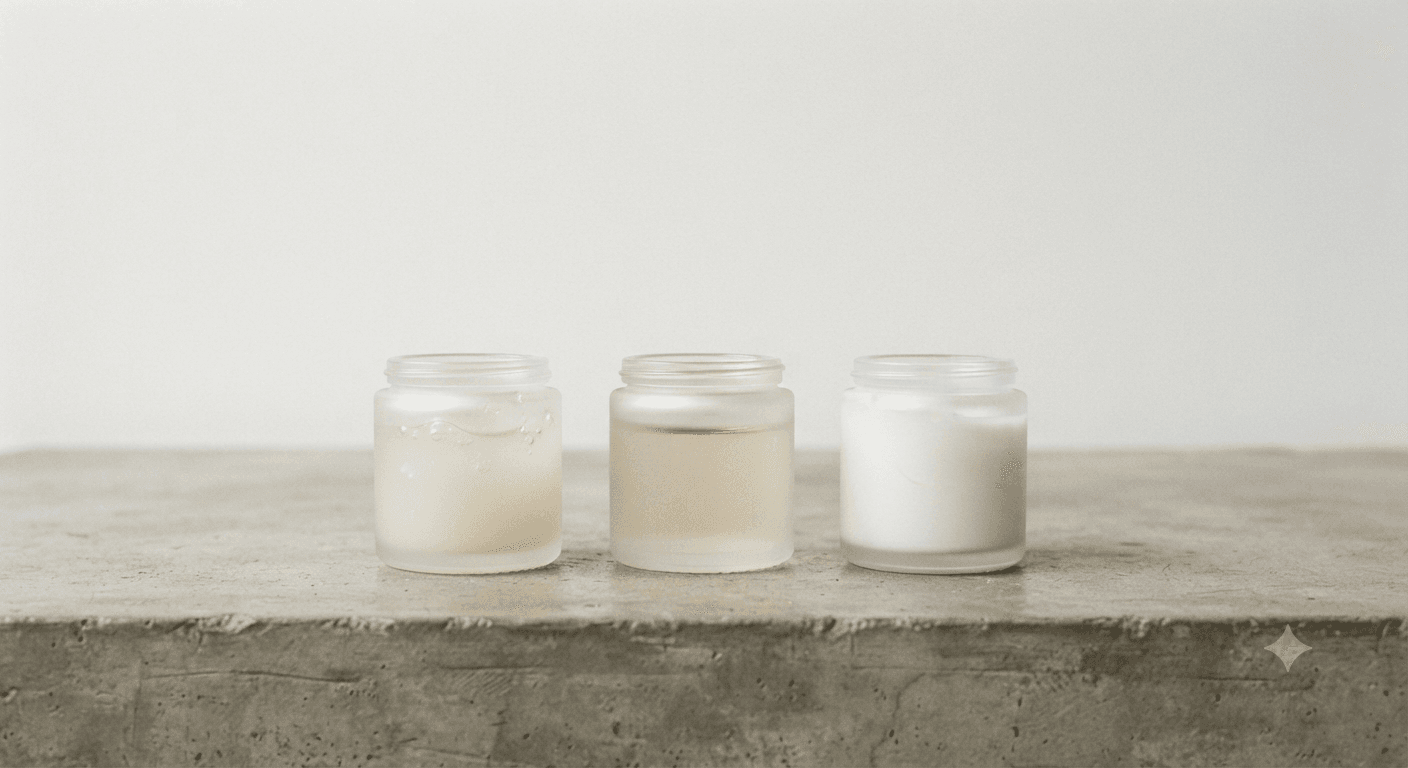
Multiple surfactants appear in most modern cleansers, even ones marketed as simple or minimal. A single surfactant can clean skin, but it usually cannot clean well, feel mild, and produce a stable lather all at once. Combining surfactants is how a formula solves three jobs with one ingredient list.
Why a One-Surfactant Cleanser Rarely Works Well
Anyone who has used a very basic soap-based cleanser has felt the trade-off of relying on one cleansing ingredient. A formula built around a single surfactant tends to lean too far in one direction.
Common outcomes include:
- Strong foam paired with a tight, stripped feeling afterward
- A gentle formula that barely lathers or feels like it is doing nothing
- Cleansers that feel fine on the first wash but irritate with daily use
- Formulas that clean oil well but leave a filmy residue behind
These trade-offs are not a flaw in surfactant chemistry. They are a sign that one ingredient was asked to do a job usually split between two or three.
The Science Behind Multiple Surfactants
A surfactant molecule has a water-loving end and an oil-loving end, which is what lets it lift oil away when rinsed with water. Different surfactant types differ in how strongly that oil-loving end binds, and how they behave when mixed with water.
Anionic surfactants, which carry a negative charge, tend to produce strong foam and clean oil effectively. They can also bind too strongly to skin’s surface lipids, which is what causes dryness in some formulas.
Amphoteric surfactants carry both a positive and negative charge depending on the pH around them. On their own they clean gently, sometimes too gently to remove sunscreen or heavier residue.
When an anionic and an amphoteric surfactant are combined, they interact through a process called mixed micelle formation. Micelles are small clusters that trap oil at their center. Mixed micelles behave differently from either surfactant alone, usually lowering irritation while keeping cleansing performance intact.
Why Cleansers Are Built as Systems, Not Single Ingredients
A cleansing system usually includes a primary surfactant for cleansing power, a secondary or co-surfactant for mildness and foam texture, and sometimes a third surfactant to fine-tune viscosity or rinse feel.
The ratio between these surfactants matters more than which individual ingredients are chosen. Two formulas can use identical surfactants at different ratios and feel completely different on skin, one mild and one stripping.
The nuanced point most explanations skip: adding more surfactants does not automatically make a formula gentler. A poorly balanced blend of three mild surfactants can still irritate if the total surfactant concentration is too high. Balance, not quantity, is what a formulation team is actually solving for.
How to Read a Multi-Surfactant Ingredient List
- Look for more than one surfactant near the top of the ingredient list, since this usually signals a balanced system rather than a single harsh cleanser.
- Do not assume a longer surfactant list means a harsher formula, since combining mild surfactants is often gentler than using one strong one.
- Check if a co-surfactant like a betaine or glucoside appears alongside a stronger primary surfactant, since this pairing usually softens the overall effect.
- Judge the cleanser by how skin feels after rinsing, not by how much it foams, since foam volume does not indicate the surfactant ratio used.
Climate Relevance for Indian Skin
Heat and sweat cycles through most of the Indian year mean skin produces more surface oil and salt residue than in cooler climates. A single mild surfactant can struggle to fully remove this load, while a well-balanced multi-surfactant system handles both oil and residue without needing higher concentrations.
Hard water, common across many Indian cities, reduces how efficiently some surfactants foam and rinse. Combining surfactant types helps maintain consistent cleansing performance even when water mineral content varies from one city to another.
Urban pollution adds fine particulate matter to skin’s surface daily. Removing this effectively without over-stripping requires a surfactant blend, since particulate removal and lipid preservation are often handled by different surfactant types within the same formula.
Where This Fits Into a Cleansing Formula
Nature Theory builds its face wash around a multi-surfactant system rather than relying on one primary cleansing agent. Several surfactants are balanced by ratio to manage cleansing, mildness, and rinse feel together. This reflects a formulation-first approach, where the system is designed around the outcome rather than around a single ingredient claim.
Summary
Multiple surfactants exist in most cleansers because no single surfactant reliably balances cleansing power, mildness, and rinse feel on its own. Combining surfactant types allows a formula to solve several jobs at once, provided the ratio is deliberate rather than accidental. A longer surfactant list is not automatically better or worse. What matters is how those surfactants are balanced together.
Frequently Asked Questions About Multiple Surfactants
Are cleansers with multiple surfactants harsher on skin?
Not necessarily. A blend of mild surfactants is often gentler than a formula built around one strong surfactant. The total concentration and ratio matter more than the surfactant count.
Why do some Indian face washes feel different with hard water in cities like Delhi or Hyderabad?
Hard water minerals interact differently with different surfactant types, which can change foam and rinse feel. A multi-surfactant system is generally more consistent across varying water hardness than a single-surfactant formula.
Does more foam mean a cleanser has stronger surfactants?
No. Foam level depends on the specific surfactants used and how they are combined, not on cleansing strength. A low-foam formula can still clean effectively if the surfactant system is well balanced.
Is a multi-surfactant cleanser better suited to humid, sweat-heavy days in cities like Mumbai or Chennai?
Often, yes. A balanced blend can manage both oil and sweat residue without needing higher surfactant concentrations, which helps avoid the stripped feeling common after washing in heat and humidity.
Latest Posts
Continue learning how skincare works.
We explain ingredients, formulation systems, and climate-based skincare in a structured way.