
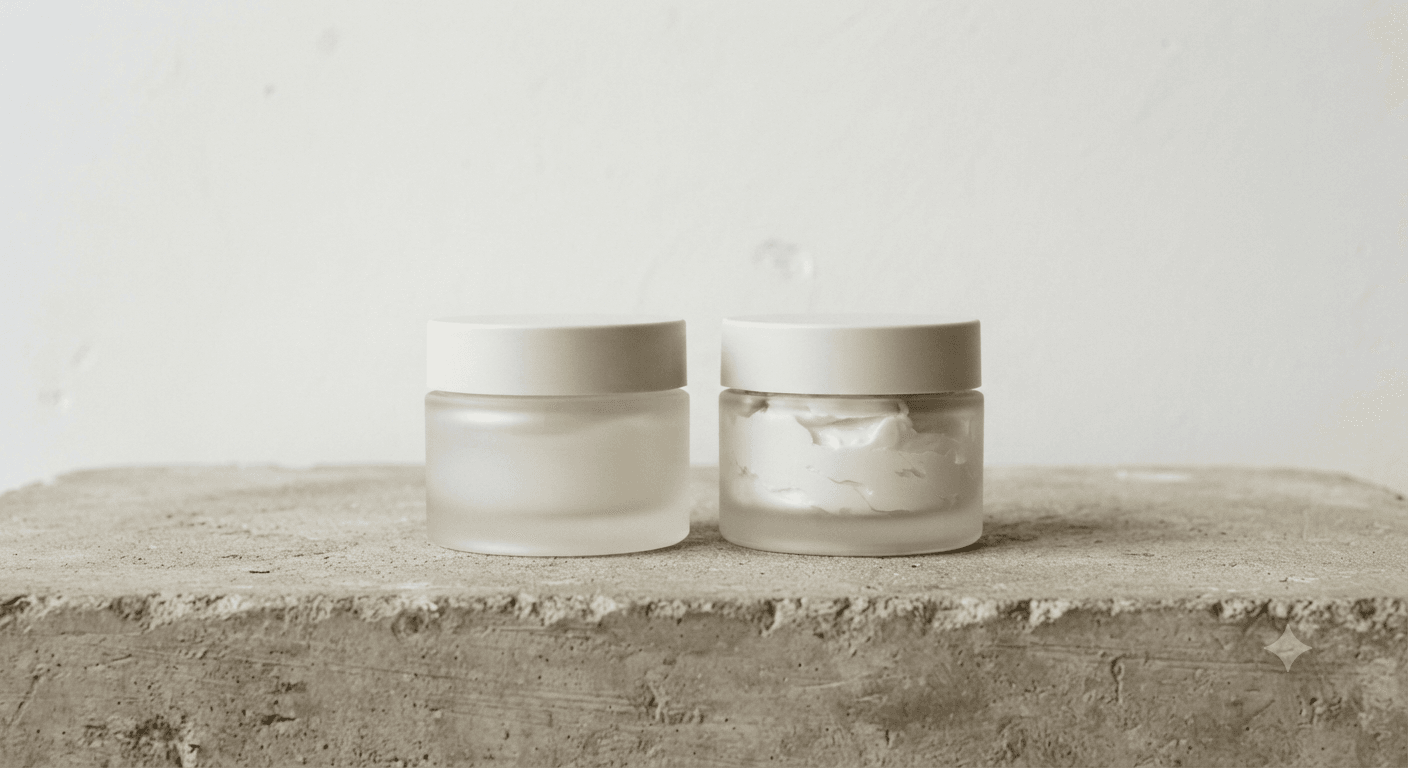
Day and night creams are often treated as the same product used at different times, differing only in scent or packaging. In Indian conditions, that assumption breaks down quickly. Heat, humidity, and indoor air conditioning create two distinct sets of skin demands that a single formula cannot meet equally well.
Why One Moisturizer Rarely Works for Both Day and Night
Many people use whichever moisturizer is on hand, assuming a cream is a cream regardless of when it is applied. In Indian conditions, this often leads to a mismatch between formula and environment.
Common signs of mismatch include:
- A rich cream that feels heavy and greasy under daytime heat or makeup
- A lightweight gel that leaves skin under-moisturized by morning
- Shine building up under sunscreen within a few hours of application
- Skin feeling tight by early morning despite applying cream the night before
This is not simply about personal preference. It reflects a genuine difference in what skin needs to manage across a full day and a full night in Indian conditions.
The Science Behind Day and Night Creams
Skin loses water constantly through a process called transepidermal water loss, water moving from deeper skin layers to the surface and evaporating. This loss speeds up in low humidity and slows in high humidity.
During the day, skin in most Indian cities cycles between high humidity outdoors and low humidity indoors under air conditioning, sometimes several times within a few hours. A day formula has to support hydration without adding a heavy lipid load that feels uncomfortable in heat.
Overnight, ambient temperature typically drops and there is no sun exposure, sweat, or makeup to manage. Skin’s own overnight processes are more active during sleep, and a richer lipid phase can be tolerated without the daytime concerns of shine or heaviness.
These are not marketing distinctions. They reflect measurably different environmental and physiological conditions across a 24-hour cycle.
How Day and Night Creams Are Built Differently
A day formula typically uses a lighter combined lipid phase, chosen for fast absorption and a low-tack finish, alongside a humectant system built to perform under fluctuating indoor and outdoor humidity.
A night formula generally carries a higher total lipid concentration and a thicker viscosity target, since there is more time for a richer texture to absorb fully and no daytime performance constraints like makeup compatibility.
The nuanced point most explanations skip: viscosity and lipid concentration are not chosen for feel alone. A thicker night formula is often built to slow water loss over a longer, uninterrupted period, while a day formula is built to perform across repeated environmental shifts rather than one stable stretch of hours.
How to Choose and Use Day and Night Creams Correctly
- Match texture to your daily environment, not personal preference alone, since AC exposure and outdoor heat both affect how a formula performs.
- Apply a night formula after cleansing only, without sunscreen or makeup layered on top, since it is formulated for an uninterrupted absorption period.
- Do not skip a day formula assuming your night cream is enough, since daytime humectant needs differ from overnight lipid needs.
- Reassess texture seasonally, since a formula suited to peak summer heat may feel insufficient during cooler, drier months.
Climate Relevance for Indian Skin
AC exposure through the day lowers indoor humidity even while outdoor conditions remain hot and humid, creating repeated hydration swings that a day formula has to accommodate without becoming either too light or too heavy.
Heat and sweat cycles across most of the Indian year increase how quickly a day formula needs to absorb, since a slow-absorbing cream under heat and perspiration can feel uncomfortable within a short time.
Monsoon and humidity shifts change how both formulas are perceived across the year. A night formula may feel appropriately rich in a dry month and slightly heavier during high-humidity weeks, which is a normal seasonal variation rather than a formulation flaw.
Where This Fits Into a Formulation System
Nature Theory builds its day and night formulas around different viscosity and lipid targets, matched to daytime environmental swings and overnight stability respectively. Each formula is developed around its specific use conditions rather than adapted from a single base recipe. This reflects a formulation-first approach to climate-relevant skincare.
Summary
Day and night creams differ because the conditions skin faces during the day and during sleep are genuinely different, not because of marketing convention. A day formula is built for repeated humidity and temperature shifts, while a night formula is built for a longer, more stable absorption period. Choosing based on time of use, not habit, is what actually serves skin in Indian conditions.
Frequently Asked Questions About Day and Night Creams
Can I use the same moisturizer for day and night in Indian weather?
It is possible, but it usually means compromising on either daytime comfort or overnight hydration. Two formulas suited to their specific conditions generally perform better than one compromise formula.
Why does my night cream feel too heavy during Mumbai or Chennai humidity?
Night formulas are often built assuming lower ambient humidity than daytime, since AC and cooler night air typically lower moisture in the room. During high-humidity months, a lighter application amount can help.
Do I need a separate day cream if I already use sunscreen?
Yes, in most cases. Sunscreen and moisturizer serve different functions, and a day cream’s humectant system supports hydration that sunscreen alone does not provide.
Does hard water in cities like Delhi or Hyderabad affect how day and night creams perform?
Hard water mainly affects rinse-off products like cleansers rather than leave-on creams. Day and night cream performance depends more on formulation and ambient humidity than on water hardness.
Latest Posts
Continue learning how skincare works.
We explain ingredients, formulation systems, and climate-based skincare in a structured way.