
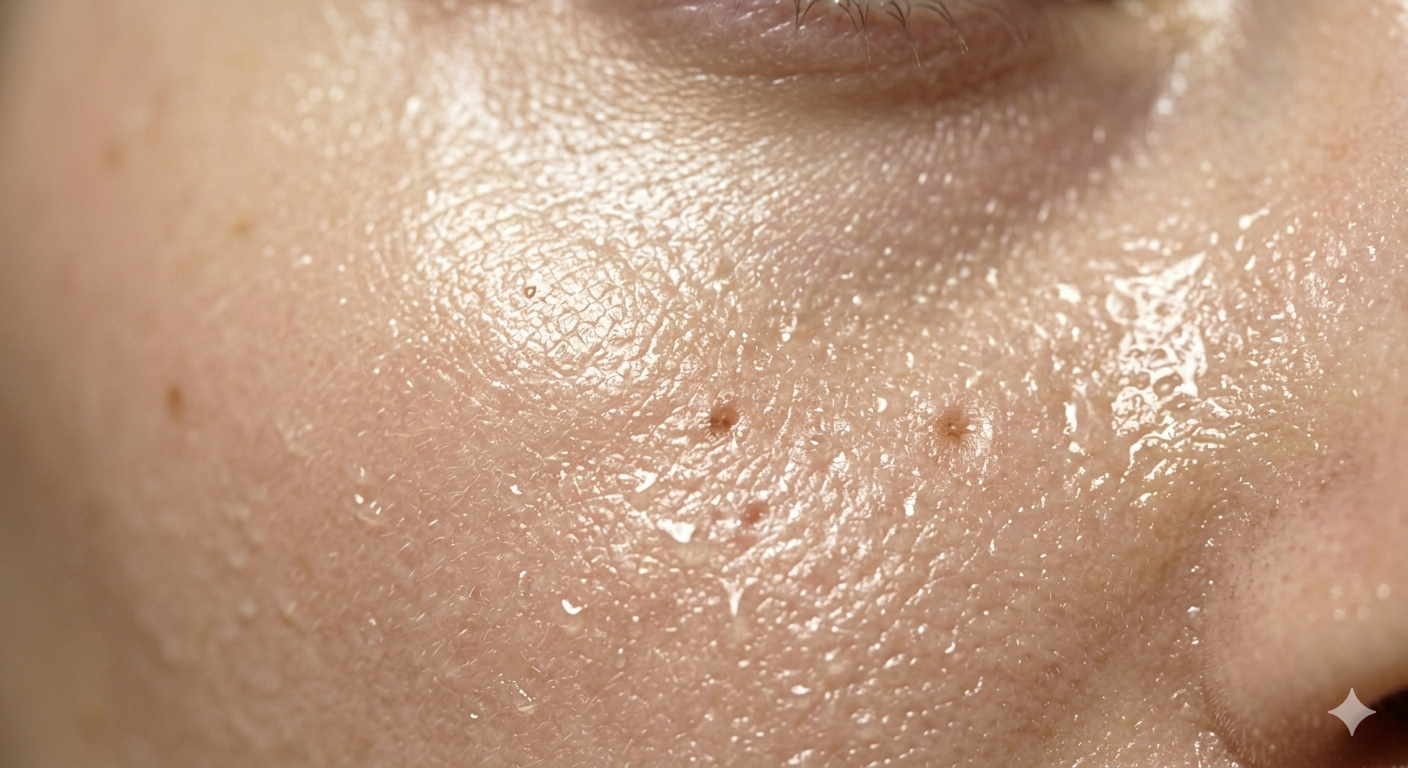
The Problem
Hyaluronic acid for skin is widely known as a powerful hydration ingredient. It is often associated with plump, well-hydrated skin.
Yet, many people experience something different.
Skin may feel hydrated immediately after application, but the effect fades quickly. In some cases, it may even feel dry again within a few hours.
This raises an important question:
If hyaluronic acid holds so much water, why doesn’t hydration last?
What Hyaluronic Acid Actually Does
Hyaluronic acid is a humectant, meaning it helps increase the water content of the skin.
It is also naturally present in the body, where it plays a role in maintaining hydration and structural support.
Its structure allows it to bind a very high amount of water relative to its weight, contributing to improved surface hydration and smoother skin texture.
How Hyaluronic Acid Holds Water in Skin
Hyaluronic acid binds water and helps hold it within the outer layers of the skin.
This leads to improved hydration, smoother texture, and a temporary plumping effect.
However, this water is not permanently retained. Without support, it can evaporate over time.
Why Hyaluronic Acid Can Feel Temporary (or Even Drying)
Hyaluronic acid introduces water into the skin—but it does not prevent that water from leaving.
If the skin barrier is not supported, hydration is lost through transepidermal water loss.
In dry or air-conditioned environments, this effect becomes more noticeable. Water drawn to the skin can evaporate more quickly, leading to a feeling of dryness after initial hydration.
What Actually Works: The Simple Rule
Hyaluronic acid works best when it is followed by a barrier-supportive moisturizer.
This creates a complete system:
- water is attracted
- water is retained
- the barrier remains stable
Using hyaluronic acid alone often leads to temporary hydration.
Using it within a structured routine leads to consistent results.
This is why moisturizers are designed to not just hydrate, but also reduce water loss and support the skin barrier.
Hyaluronic Acid vs Glycerin: Different Roles
Hyaluronic acid and glycerin are both humectants, but they function differently.
Glycerin integrates more closely with the skin’s natural hydration system and provides steady, consistent hydration.
Hyaluronic acid works more at the surface level, improving immediate hydration and texture.
In well-designed formulations, both are often used together:
- glycerin supports ongoing hydration
- hyaluronic acid enhances surface hydration
Not All Hyaluronic Acid Works the Same Way
Hyaluronic acid differs based on molecular weight.
High molecular weight (HMW) hyaluronic acid remains on the surface, where it helps improve texture and reduce water loss.
Low molecular weight (LMW) hyaluronic acid can reach deeper into the outer layers of the skin, supporting hydration more structurally.
This distinction matters because it determines where the ingredient actually functions—and how effective it is over time.
How Indian Climate Affects Hyaluronic Acid Performance
In Indian conditions, hydration is influenced by constant environmental shifts.
Skin is exposed to heat, humidity, pollution, and air-conditioned dryness within the same day.
A product that feels hydrating outdoors may not maintain that effect indoors. Frequent cleansing and environmental exposure can further disrupt hydration stability.
This is why hyaluronic acid can feel inconsistent—it is responding to changing conditions.
This is one of the reasons skin often becomes dehydrated in Indian summers, even when it feels oily on the surface.
What This Means in Practice
If hyaluronic acid does not feel effective, the issue is rarely the ingredient itself.
For example, a hyaluronic acid serum may feel hydrating immediately but fade in dry environments. When followed with a moisturizer that supports the barrier, hydration lasts significantly longer.
The ingredient is the same. The system is not.
Conclusion
Hyaluronic acid holds water in the skin by binding it at the surface and increasing hydration.
But hydration is not just about holding water—it is about keeping it.
In Indian climates, where conditions shift throughout the day, this becomes a formulation challenge rather than an ingredient choice.
This is why hydration depends on how a system is designed.
This understanding becomes essential when building a simple daily skincare routine that maintains hydration consistently.
At Nature Theory, hydration is approached as a structured system—where humectants like hyaluronic acid are supported by barrier-focused formulation designed for Indian conditions.
FAQs
Does hyaluronic acid work in humid weather?
Yes, it can attract moisture more effectively in humid environments. However, hydration still depends on how well that moisture is retained.
Can hyaluronic acid dry out skin?
In dry or air-conditioned conditions, hydration can be lost if it is not supported by a barrier-protecting product.
Should I use hyaluronic acid in Indian summer?
Yes, but it works best when used with a moisturizer that helps retain hydration across changing conditions.
Latest Posts
Continue learning how skincare works.
We explain ingredients, formulation systems, and climate-based skincare in a structured way.
2 thoughts on “How Hyaluronic Acid Holds Water in Skin (And Why It Doesn’t Always Last)”
Comments are closed.