
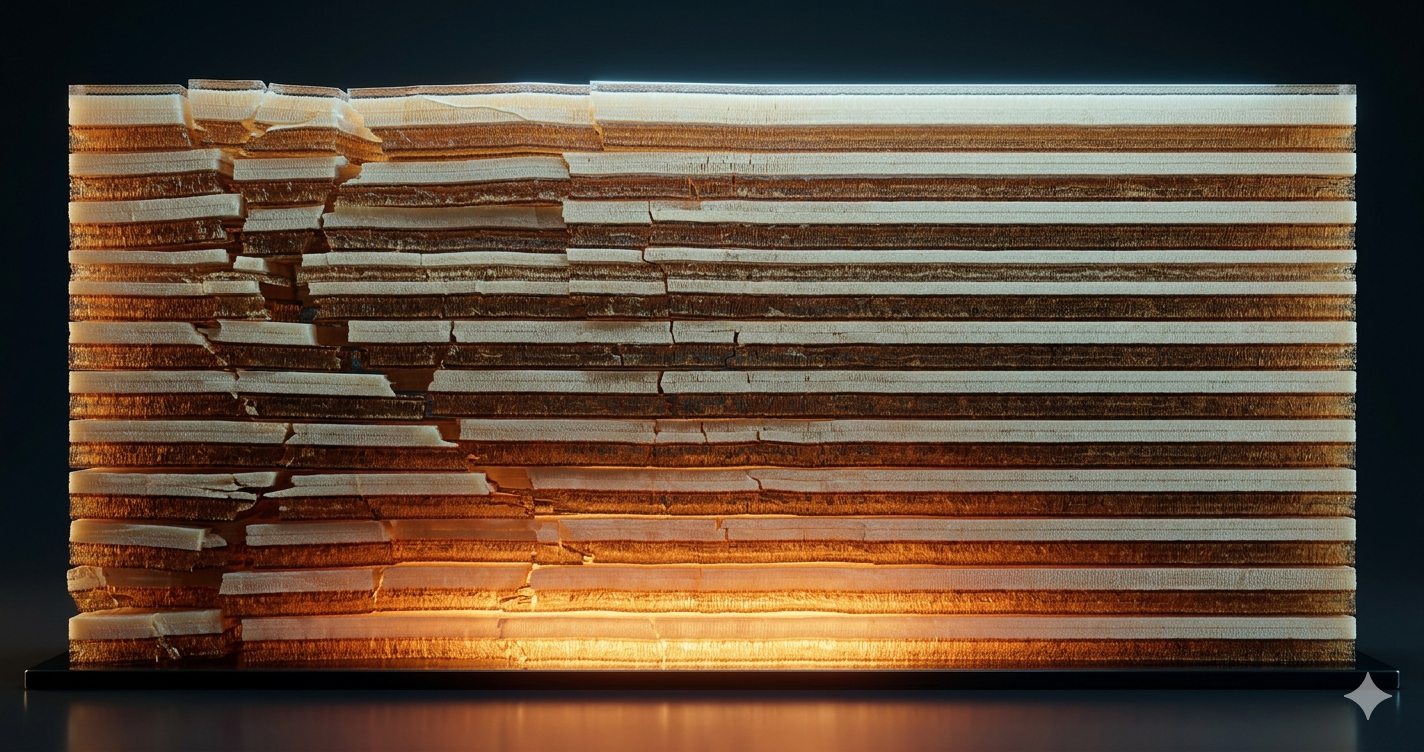
The skin barrier is not a single layer. It is a structured system of cells and lipids arranged in a precise architecture — and when that architecture is disrupted, the skin’s ability to retain moisture and protect itself from external stress is significantly reduced.
Barrier repair is the process of restoring this architecture to functional condition. But it is often misunderstood as simply applying a rich moisturiser. While moisturisers play a role, genuine barrier repair is a more specific process — one that depends on the type, proportion, and arrangement of the lipids used.
The lipid composition of a healthy skin barrier follows a consistent ratio: approximately equal amounts of ceramides, cholesterol, and long-chain fatty acids. This ratio is not arbitrary. Each component serves a distinct function. Ceramides form the structural backbone of the lamellar bilayers — the organised, layered lipid sheets that slow water movement through the skin. Cholesterol provides fluidity and stability to the barrier structure. Fatty acids support the integrity of the lipid matrix and maintain the slightly acidic pH of the skin surface.
When the barrier is disrupted — whether by harsh cleansing, environmental exposure, inflammatory conditions, or cumulative stress — this lipid ratio shifts. The result is a less organised barrier, increased TEWL, and skin that is more susceptible to irritation and dehydration. Replenishing the lipids is important, but replenishing them in approximately the right ratio is what produces lasting recovery.
In practical formulation terms, this means that barrier repair products are not simply those with the most oils. An oil-heavy formula that lacks ceramide-equivalent lipids may improve the feel of skin without addressing the structural deficit. Well-designed barrier repair formulations consider the full lipid system — combining actives that support ceramide synthesis, structural lipids that replenish what is lost, and occlusive components that reduce ongoing water loss while repair takes place.
Ingredients like niacinamide support barrier repair through a different mechanism — they stimulate the skin’s own ceramide production and reinforce the tight junctions between skin cells, improving structural integrity over time. Panthenol provides similar benefit by supporting cell renewal and reducing transient inflammation. These are not occlusives or humectants. They are actives that support the skin’s own repair process.
In Indian conditions, barrier disruption is common. Heat and sweat followed by cleansing, air conditioning, pollution, and hard water all place repeated stress on the barrier. Understanding barrier repair as a structural process — not just a comfort one — changes how products are evaluated and used.
This section covers how the skin barrier breaks down, how lipid systems work to rebuild it, and what to look for in formulations designed for genuine barrier support.
Articles in this section:
- Why Moisturizers Work: The Science Explained
- Emollients vs Occlusives vs Humectants Explained: How Moisturizers Actually Work
- How to Choose a Barrier Repair Cream for Dry Skin (That Actually Works)
- Shea Butter in Skin Barrier Repair: How It Works, Why Concentration Matters, and What Indian Skin Actually Needs
- What Actually Happens to Your Skin While You Sleep — And Why Most Night Creams Miss It
- How Lipid Systems Actually Repair the Skin Barrier
- Is Jojoba Oil Actually Good for Oily Skin?
- What Is Kokum Butter and Why Is It Used in Night Creams?
Continue learning how skincare works.
We explain ingredients, formulation systems, and climate-based skincare in a structured way.