
Skincare products are not collections of ingredients. They are formulated systems — and the distinction matters.
An ingredient by itself tells you very little about how a product will perform. The outcome depends on how that ingredient is combined with others, what its concentration is, how the pH of the formula affects its activity, how the emulsification system structures the product, how the preservative system maintains its stability, and how the final texture interacts with the skin surface during and after application.
Formulation science is the discipline that governs all of these decisions. It is why two products with similar ingredient lists can feel and perform completely differently. It is also why a product with a long, impressive-looking ingredient list can fail to deliver results — because an ingredient present at 0.01% for label appeal does not perform the same function as the same ingredient at 3%.
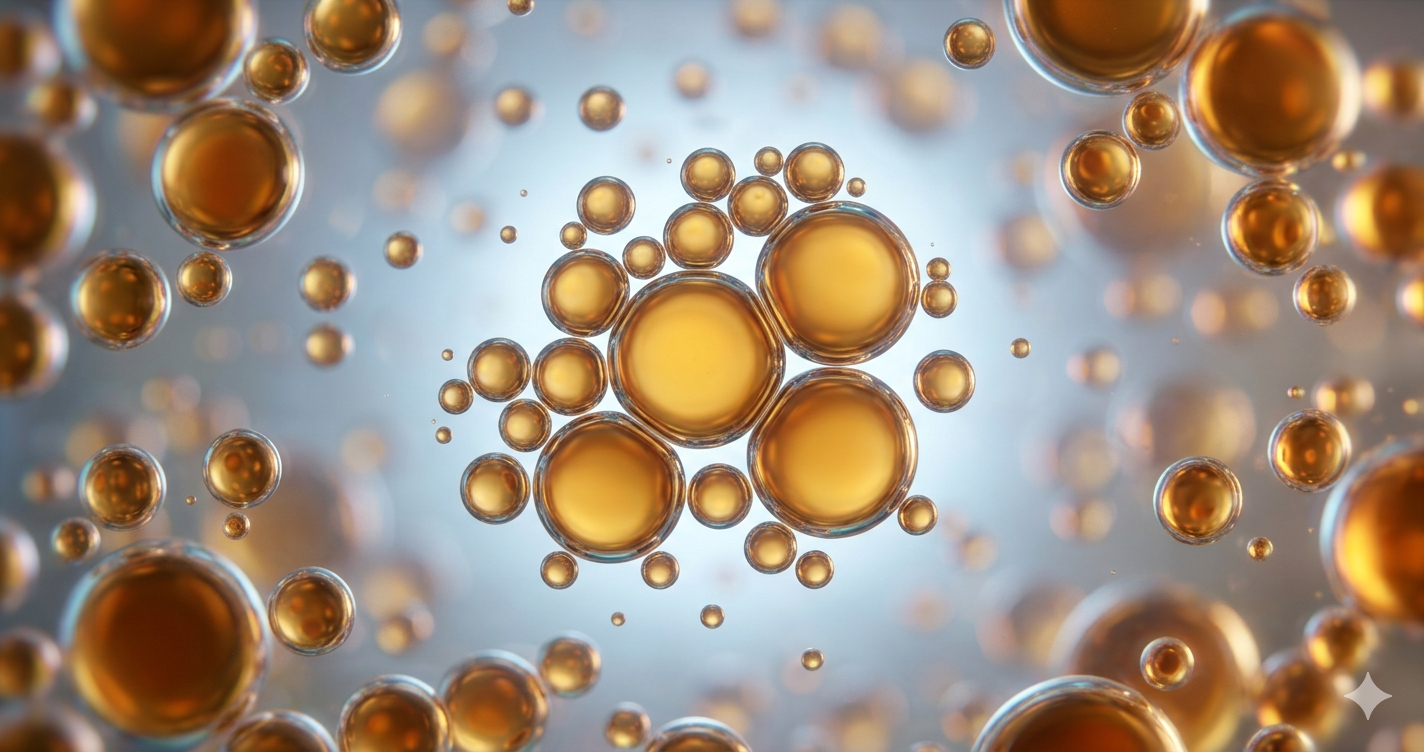
One of the most fundamental formulation concepts is emulsion design. Most skincare products are emulsions — mixtures of water and oil that would normally separate, held together by emulsifying agents. An oil-in-water emulsion has tiny droplets of oil suspended in a water phase; it tends to feel lighter and absorb more easily. A water-in-oil emulsion has water droplets suspended in an oil phase; it tends to feel richer and is more occlusive.
The emulsifier chosen determines how stable the emulsion is, how it feels on the skin, how it behaves at different temperatures, and whether it remains homogeneous over the product’s shelf life. This is not a minor detail. It is the structural architecture of the product.
pH is another variable that most consumers never encounter, but which affects formulation performance profoundly. The skin surface has a slightly acidic pH — typically between 4.5 and 5.5. Many active ingredients are pH-dependent: they require a specific pH range to remain chemically active. A well-formulated product accounts for this. It is designed so that active ingredients are delivered in a pH range where they function — not one that merely keeps the formula stable.
Preservation is a third formulation variable that matters for both safety and efficacy. Water-containing products can support microbial growth. An effective preservation system — one that protects the product without sensitising the skin — requires careful selection and testing, including ISO 11930 microbial challenge testing. A preservative system that looks clean on a label but fails challenge testing is a safety problem, not just a formulation flaw.
This section explains formulation science in plain language — covering emulsions, pH, stability, preservation, and the structural thinking behind product design.
Articles in this section:
- Why Skincare Formulation Matters More Than Ingredients
- What Is a Skincare Formulation and How Does It Work
- What Is an Emulsion in Skincare Formulation
- Difference Between Oil-in-Water and Water-in-Oil Emulsions
- Why Preservatives Are Necessary in Skincare
- What Actually Causes Skincare Product Separation
- What Really Controls Gel Cleanser Texture?
Continue learning how skincare works.
We explain ingredients, formulation systems, and climate-based skincare in a structured way.